You Can Now Order Chemical-Free, Plastic-Free Garlic with Amazing Health Benefits
There are few health foods in the world as potent as garlic. This fact was established even 2200 years ago in Charaka Samhita, the ancient Sanskrit text of Ayurvedic medicine: “But for its unpleasant odor, garlic would be costlier than gold!” Today, garlic is cheaper than gold but you can pay $25-30 for a pound of organic garlic in stores. In this article, I will show you why not all organic garlics are the same, and where you can buy great chemical-free garlic varieties with amazing health benefits at about half the retail organic price from small American family farms.
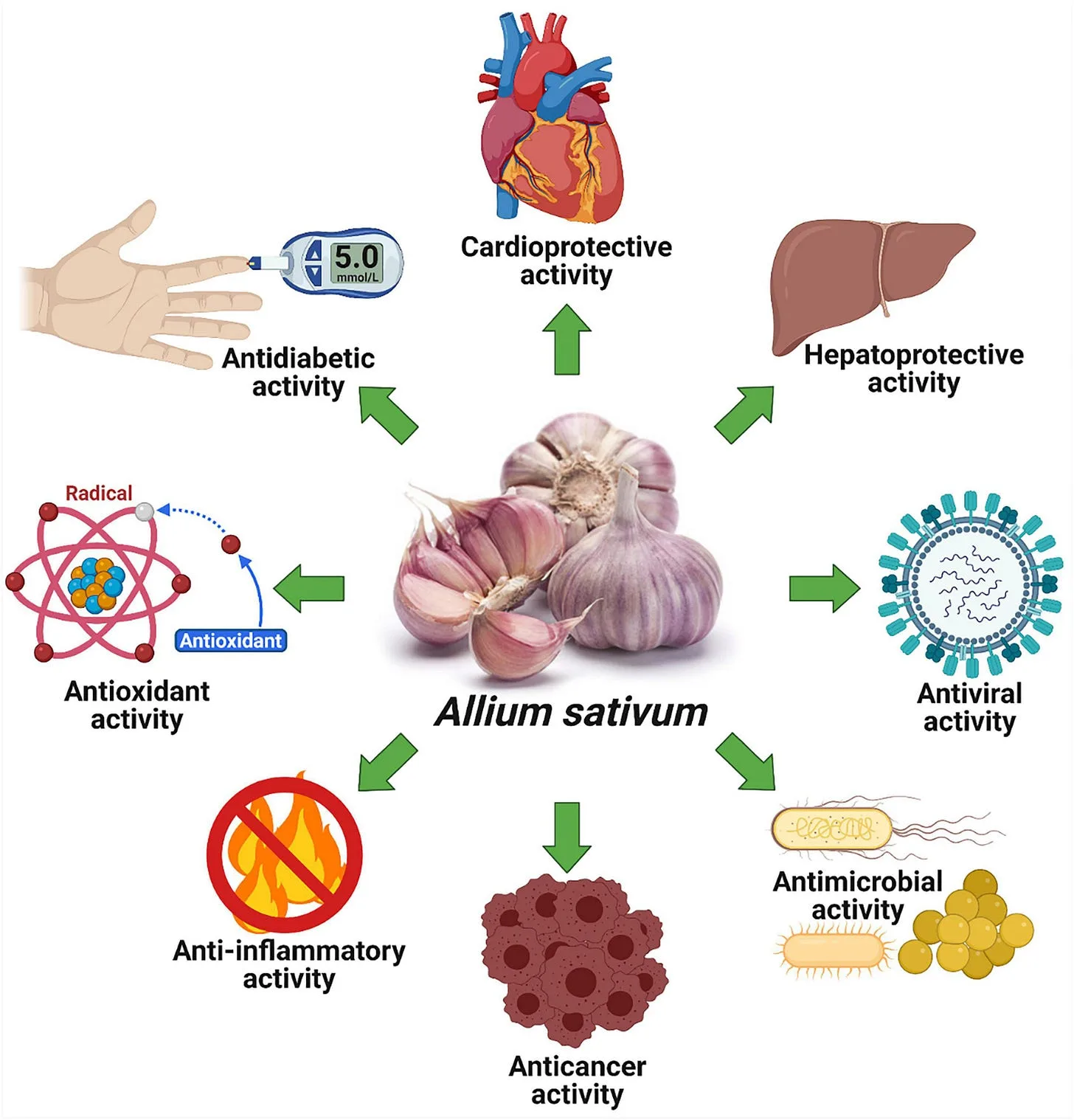
Modern science has established that garlic can reduce blood pressure, improve elevated serum cholesterol, decrease blood clots and platelet aggregation (blood thinning effect - see my earlier article on other natural ways to prevent a thick blood), protect vascular endothelial cells from damage by LDL cholesterol, and boost levels of Glutathione, the essential antioxidant responsible for mitigating cellular damage.; all of these effects are of potential cardiac benefit. I have already shared the science behind these benefits in may earlier article Learn these Facts before Using Garlic as a Magic Food: Why is good garlic so costly and imported garlic so cheap?
Science today is complex, sponsored for profit and politicized. Guided by his God-given conscience and not politics/profits, Ray Armat, Ph.D. is an unsponsored polymath, former NASA grantee and an independent farmer, dedicated to share useful uncensored simplified science. You can encourage him by sharing these articles and by subscribing (free or by donation.
But much of garlic today is grown using either chemical pesticides or organic fertilizers and plastic films like those shown here:
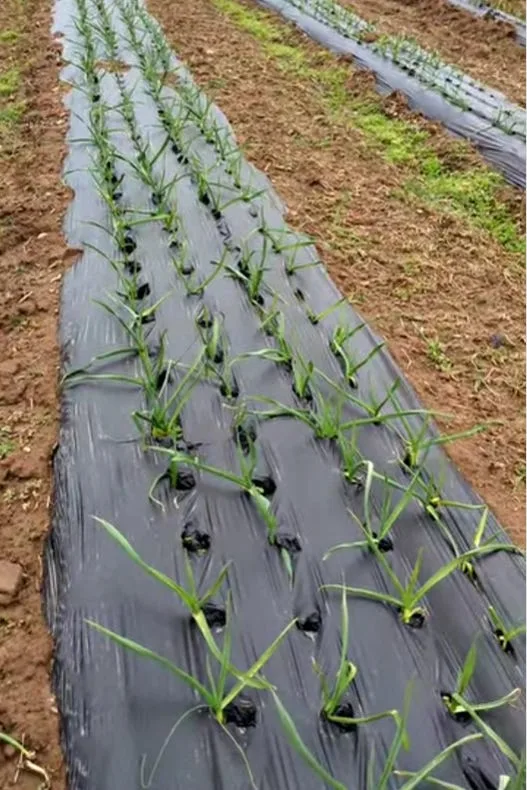
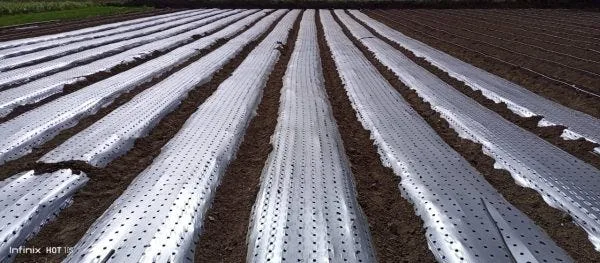
There are only a few exceptions like the garlic now available from small Pennsylvania family farms on https://pennsylvaniafarmfresh.com/ as shown in the image below. You can see buttercups and other beautiful flowers and vegetation in between garlic rows mulched with chemical-free straw hay. never fertilized, never sprayed, never fumigated, never bleached! I am helping the small family farms grow and sell wholesome hand-cultivated, hand-weeded garlic grown without any chemicals, fertilizers and plastic films. It’s available mainly in Southeast Pennsylvania and they usually sell out every year so I am just sharing it here with my followers who are health conscious and looking for real most potent garlic. I don’t think they deliver outside Pennsylvania (unless they charge postage fee) but if you don’t live in PA, you can offer it as a gift to friends or family living in Southeast Pennsylvania. But why does it matter to grow garlic chemical- and plastic-free?
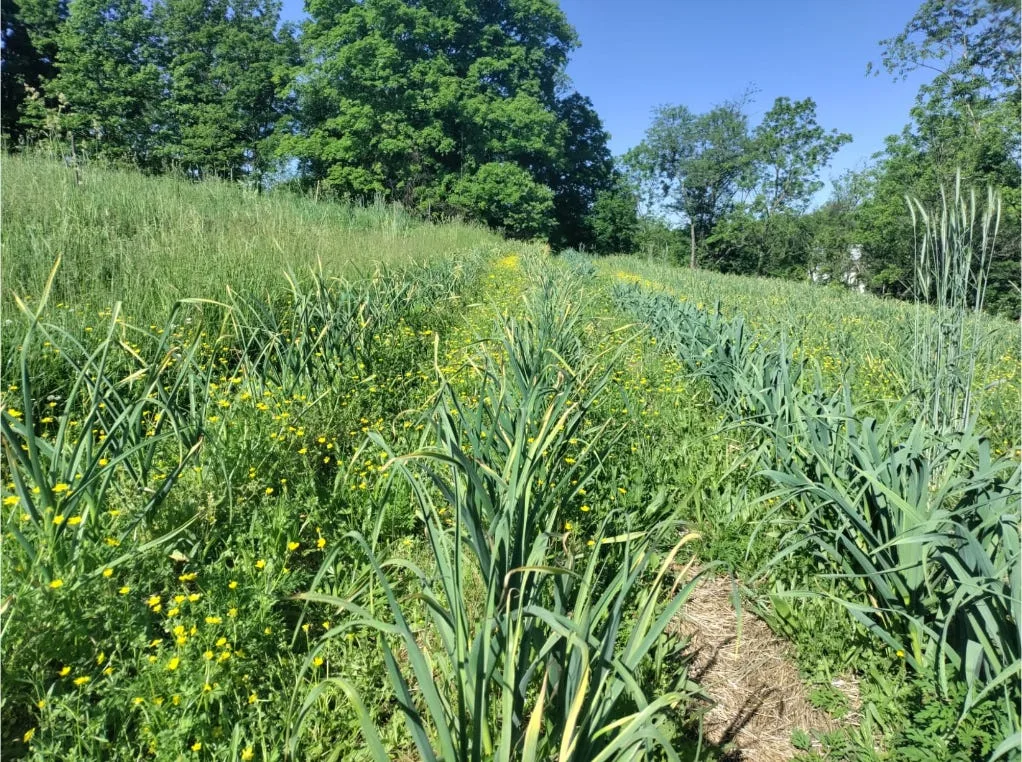
Allicin and other sulfur-containing compounds that give garlic its medicinal potency and pungent flavor are produced as a natural defense system at higher rates when the plant experiences mild, natural environmental stressors (like temperature swings or minor pest pressures) like those experienced by garlic sold on Pennsylvania farmFresh.com. The microclimatic warming caused by plastic film shortens the overall growing season, forcing the garlic to mature and harvest earlier than normal. This compressed timeline deprives the bulb of the final, late-stage development weeks in the ground when antioxidant accumulation peaks.
We already have discussed the harmful effects of chemical pesticides. But plastic films have their own issues:
- While plastic raises soil temperatures for early growth of garlic, it can become dangerously hot during late spring, restricting root expansion.
- Because plastic films are mostly impermeable (except the holes), they obstruct much of water and gas exchange between the soil and the atmosphere. Although higher soil temperatures, moisture and carbon dioxide can initially accelerate root development and the microbial breakdown of soil organic matter, over time, there is oxygen starvation and carbon dioxide accumulation near the soil, which could expedite growth of anaerobic bacteria that can release toxic byproducts (like methane or hydrogen sulfide) that can suffocate/rot the plant roots. This type of so-called “sour soil” will have a weak compressible structure because it usually lacks glomalin (produced by aerobic fungi and bacteria).
- While the film forces rapid, premature growth by artificially heating the soil, this accelerated timeline often causes a “dilution effect”. The garlic bulb swells with water and carbohydrates faster than it can synthesize key secondary metabolites in response to normal natural stressors, possibly reducing the concentration of antioxidant compounds (like allicin) that give garlic its health benefit.
- Because plastic films prevent rain water from reaching the soil underneath, they direct water into the furrows between rows, leaving the soil directly beneath the film dry despite heavy rainfall. This so-called “Umbrella Effect” creates diverted water pools in the unmulched furrows that drain too deep into the ground, slipping past the root zone where plants cannot reach it. This concentrated runoff channeling down the narrow furrows washes away valuable topsoil and nutrients from the uncovered areas.
- Because rainfall is blocked, farmers are forced to install costly drip irrigation lines under the plastic to artificially water the roots. This can trap excess moisture under the plastic, leading to fungal diseases and rotting roots.
- Over time, degraded plastic film fragments mix into the soil, creating a subsurface microplastic layer that permanently disrupts vertical water movement and capillary action. During harvest and removal of plastic film, plastic fragments easily tear and remain in the field. Over time, these break down into microplastics, altering soil porosity and introducing harmful chemical additives and toxins into the soil.
- Unlike plastic films which act as a sterile physical barrier, decaying organic mulches (like crop straw) enrich soil fauna, improve soil structure, and enhance nutrient cycling. They naturally moderate the soil’s pH level in the root zone, which directly increases the bioavailability and root uptake of essential minerals
Why is Good Garlic Expensive? and Cheap Garlic Bleached?
Garlic sold now on pennsylvaniafarmfresh.com, while priced significantly lower than many organic garlic brands in stores (grown under plastic and some selling for as high as $30 a pound), is still not as cheap as bleached/imported and sprayed garlic. This is because growing quality garlic takes time and is extremely labor intensive compared to growing other crops, particularly if one is growing organic garlic without chemical herbicides and fertilizers. Chemical-free regenerative farmers like those at PennsylvaniaFarmfresh avoid using chemicals and rely on labor-intensive natural methods and do almost everything by hand, including seeding, planting, snipping the garlic scapes /flowers, weeding and using natural mulch (hay, grass clippings or straw), picking, curing and packing the garlic. When something is so fastidiously grown and cared for, you can guarantee no short cuts have been taken. No sprays, no chemicals, just fresh garlic.
Many imported (not farm-fresh) cheaper garlics3 are often sprayed with chemicals to prevent sprouting during storage and transit, and even bleached with chlorine to make it look white, and fumigated with methyl bromide, according to Henry Bell of the Australian Garlic Industry Association. High doses of methyl bromide can cause respiratory and central nervous system damage.
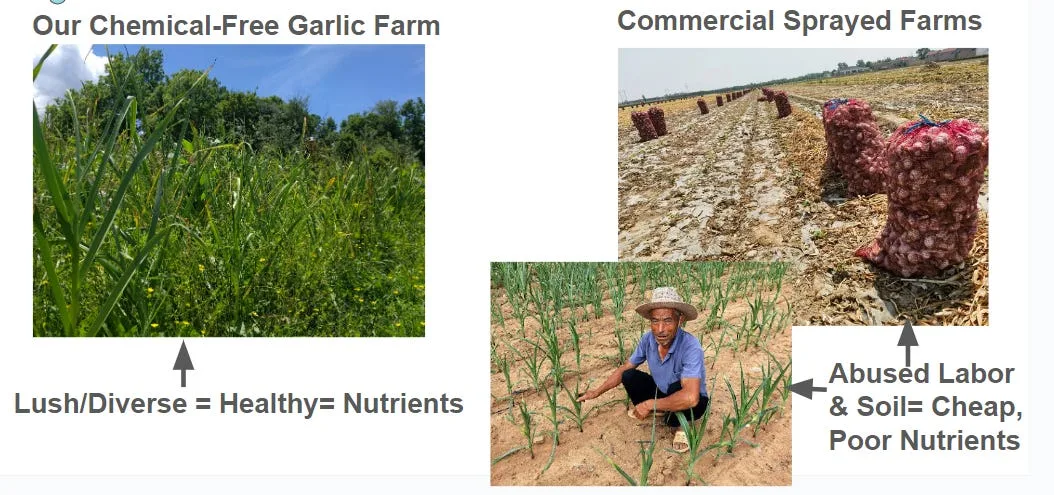
Thanks to non-aggressive weed control, PennsylvaniaFarmFresh.com chemical-free farms looks like a naturally created exquisite colorful tapestry and not a scorched dead patch of dirt. The image above compares their garlic patch to that of a commercial heavily sprayed mechanized monocrop patch of a “mega” farm, the kind that most likely made the garlic you buy cheap in supermarkets or even some roadside farm markets.
This article is my gift to seekers like you. It takes a lot of time to research and write these articles. I did my part. You can do yours by sharing the articles to expand our network of critical thinkers.
You can see a comparison of the antifungal, antimicrobial properties of chemical-free and conventional garlics in my earlier article Each Vegetable has a Unique Metabolic and Nutritional Fingerprint: Our Experiment Reveals Shocking Differences between Vegetables
Other References:
Mulching effects on the yield and quality of garlic as second crop in rice fields