
Will Fat-free Milk Fatten Humans like it Fattens Pigs?
Facts and Myths about Whole Milk
For years, the food industry and their sponsored scientists and regulatory agencies warned people against drinking whole milk and raw milk. Large dairy companies loved the popularity of skim (no fat) and low-fat (1 and 2%) milks in the 1980s because that meant they could separate and churn/turn the most valuable part of the milk (creamy fat) into expensive products like butter and ice cream.
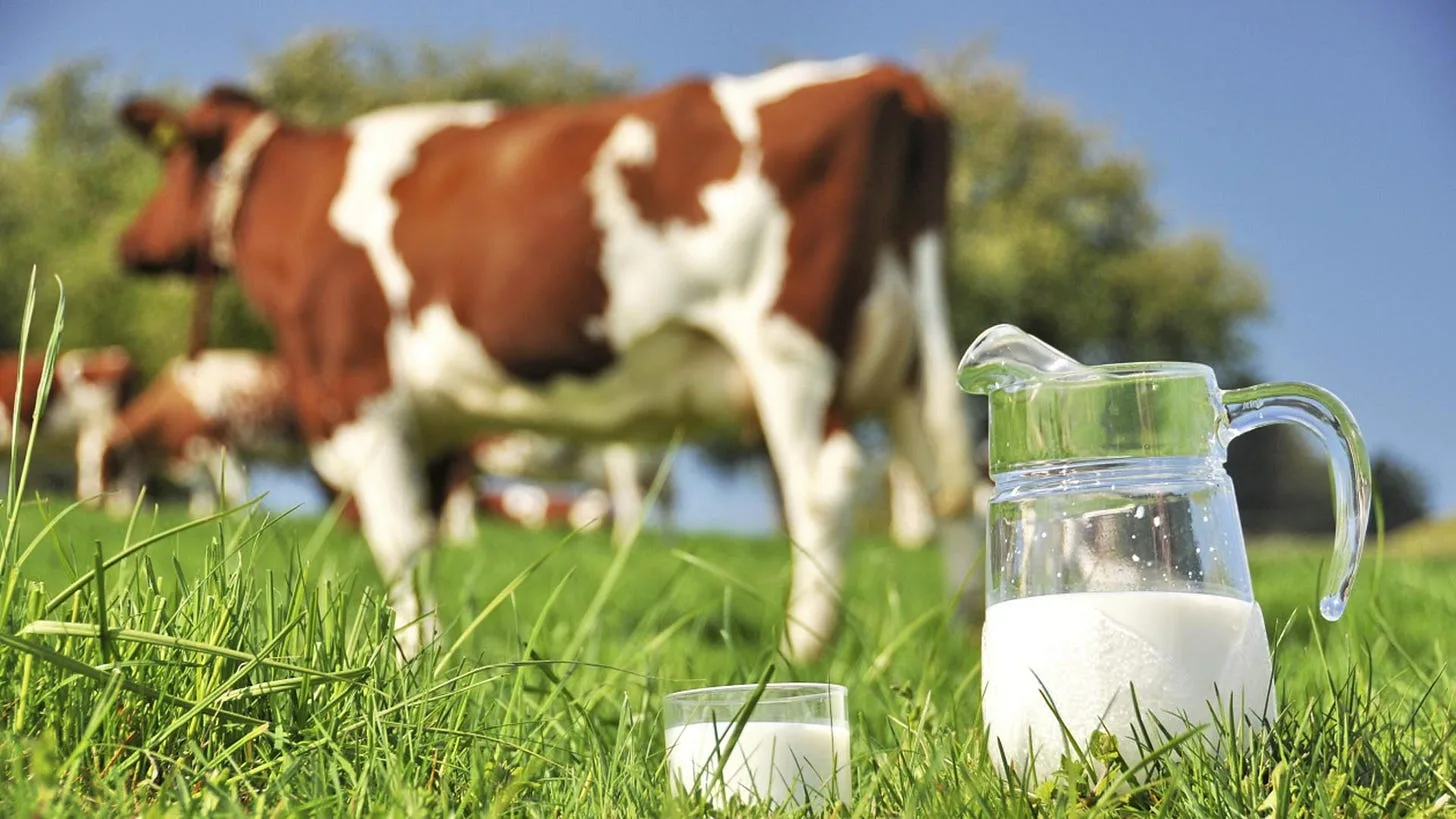
Many states ban sales of raw milk, while others allow its sale with a license. Today, practically all packaged milk sold in stores are homogenized and pasteurized, even if they are still whole-fat and organic. So is there something wrong with milk fat? How about raw milk? Why do dairy companies homogenize and pasteurize (sometimes ULTRA-pasteurize) milk? Is skim (fat-free) milk healthier than whole milk (with about 3.5% fat)? Is raw milk safe or unsafe? Are all organic milks the same and worth the extra price we pay for them? Here a summary of what you will not find on TV or mainstream media. In preparing this summary, I have used research papers as well as my own personal discussions with farmer friends who run major dairy farms.
True education is an orphan today because it’s not profitable. I spend hours to separate good information from bad, noise from signal. Please sign up (free or paid) to support this reader-supported publication, a wiser alternative to corporate-sponsored publications.
Why is Raw Milk Homogenized and Pasteurized? and is it Beneficial or Harmful?
Fermented hay (chemical-free, not sprayed) with alfalfa is cows’ favorite food and it helps them make (fat-soluble) Vitamin K2, which together with vitamin D, ensures the calcium in their milk deposits in the (calves') bones and NOT arteries (heart), joints (arthritis), kidneys (stones), eyes (cataract). When humans pasteurize the milk (at ultra high temperatures) we Deactivate lactobacilli (fermentation facilitator), Vitamins D and K2 so we may impair our body’s ability to direct calcium into bones and not to unwanted tissues (as in arteries, kidneys, eyes, etc).
The following is a modified excerpt from my book (on Amazon’s Hot New Release):
Solids and powders may be the preferred form in non-living nature but life forms mostly rely on aqueous (water-based) systems. Milk is one such product. Despite its fat content, milk is mostly water-based. There are natural colloidal forces in the liquid phase between small droplets, like those forces which cause coalescence of milk fat in raw milk into cream, the source of milk’s beneficial fat-soluble vitamins A, D, E and K. Again, humans have tried to outsmart (overcome) these natural (balancing) forces through elaborate inventions. For example, when humans decided to live in large dense urban clusters (a denatured state by itself discussed further in chapter 5) milk from domesticated cows once supplied fresh and raw to local neighbors became a corporate-traded commodity that had to be transferred, cost-effectively, across long distances to large population centers. The commoditization of fresh milk was in response to, as with other aspects of our new evolutionary path, the simultaneous need for more reach (distance), speed (from cow to factory to warehouse to store shelf to home), convenience (of supermarket vs. driving to a farm) and quantity (large population centers). Reach, speed, quantity and convenience form the holy grail of achievement by Homo economicus. To improve its shelf-life in transit and on stores’ refrigerator shelves, raw milk was pasteurized at high temperatures and then homogenized. Apart from the fact that high temperature pasteurization is shown to denature milk proteins and destroy milk’s beneficial vitamins and enzymes , the process of homogenization further denatures the milk by breaking up, through force, large fat (cream) globules in the emulsion (liquid in liquid dispersion) from an average diameter of 5 microns to an average of about 0.5 microns. One micron, or micrometer, is one millionth of a meter (still 1000 times larger than a nanometer). This, as we learned from our fine particle examples, increases the number of fat (cream) globules by about 1000 times and exposes them to surface oxidation. It is reported that this process not only oxidizes and damages conjugated linoleic acid (a valuable cancer fighting compound in raw milk) but also produces harmful cholesterol oxidation products which are atherogenic (causing formation of fatty plaques in the arteries), cytotoxic, mutagenic and carcinogenic. In fact, Dr. Kurt Oster’s milk studies from the early 1960s until the mid-1980s singled out milk homogenization as a major cause of the current epidemic of heart disease. Although Oster’s conclusions are endorsed by Weston A. Price Foundation, not every researcher agrees with them. Nevertheless, denaturing fresh milk to increase its shelf life as a mass- produced commodity seems to damage some of its key nutrients. As with other decisions we make in our new evolutionary path, we are trading off quality with quantity.
Besides pasteurization and homogenization, industrial dairy firms which buy and distribute milk from farmers, usually separate the purchased milk into its main components such as cream (fat), skim (no fat) milk and whey (water soluble proteins). Depending on the percent fat in the final milk or dairy product (like cheese, butter, whey or cream), the fractionated milk components are mixed back again and packaged into a shelf-stable product. Often (synthetic) vitamins A and D are added back to low fat milk because they are lost during the cream removal and heating (pasteurization) processes. As a result, packaged milk is a processed (man-made) product with controlled fat and added vitamins, and a nutritional profile that is different from that of natural (raw) milk. For example, while whole (raw) whole milk has a bad reputation because it has more fat than low-fat milk, in reality it is shown that it raises the HDL(good) type cholesterol and improves (reduces) the ratio of Triglycerides to HDL, which is a risk factor with heart disease (see my blog about Statins at “What did the Scientist who Discovered Statins Do for His Own High Cholesterol?”).
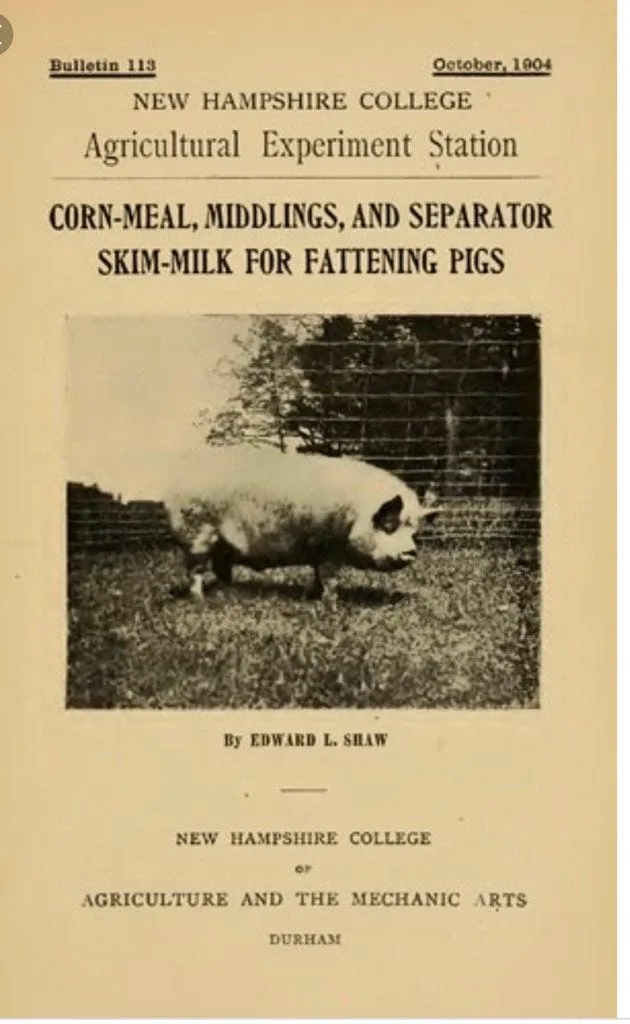
Skim Milk to Fatten Pigs?
Feeding skim milk or whey to pigs is indeed a technique used by some farmers to quickly fatten their pigs, although feeding them corn or wheat seems even more effective. The effect may be caused by lack of fat (cream) soluble vitamins A,D, E and K and enzymes in skim milk that balance protein and lactose metabolism, hence a faster raise in blood sugar and fat storage in pigs. This may be similar to how humans can gain weight even by eating low fat food, and related to what I call the 5 Bs of body metabolism in my book.
These blogs are my gifts to my subscribers. Without sharing them with others, we cannot extend our network of critical thinkers.
Some other Facts about Milk
- Remember it as 3,4,5: Average bovine milk contains about 3% protein, 4% fat and 5% lactose (carbohydrate) and the rest water. Sheep’s milk is richer in protein, fat and lactose and less watery.
- Bovine milk protein is 80% casein (larger water insoluble proteins that curdle into cheese by cultures or into yogurt by lactic acid bacteria) and 20% whey (smaller water soluble protein molecules) but human milk is 30% casein and 70% whey.
- Raw milk can be heated to be sterilized. Despite its increasing popularity, sale of raw milk is banned in many states and countries under pressures by the commercial milk industry. As a result, small dairy farmers can not directly sell their products and many of them are going out of business. There is also a lot of pressure on the mass media not to discuss raw milk. For example, an article in the Supermarket News titled “Australia is in a raw market frenzy” was removed after publication.
- The deeper the yellowness (sometimes approaching orange) of the cream is (in raw whole milk), the more beta-carotene (Vitamin A) it contains, usually indicating the cow was free ranging on grasslands (in contrast to corn-fed or alfalfa-fed cows not free ranging). The main carotenoids identified in grass foragers are lutein, β-carotene, zeaxanthin and epilutein. Certain breeds like the Guernsey and Jersey cattle produce less milk but more golden (beta carotene containing) cream per day than breeds like Holsteins.
Adding magnesium and (chemical-free, non sprayed) greens to our diet may alleviate some of this risk.
Lauren E. MacDonald et al., “A systematic review and meta-analysis of the effects of pasteurization on milk vitamins, and evidence for raw milk consumption and other health-related outcomes,” J Food Prot, 2011 Nov;74(11):1814-32
Research summary by Robert Irons, Ph.D., “Pasteurization Does Harm Real Milk,” published on https://www.realmilk.com/health/pasteurization-does-harm-real-milk/
Carl Hans Norgauer, “Ecological study of the role of highly processed milk, meat and vegetable oil in prostate cancer causation,” Universal Publishers, 2005
H. Davoodi et al., “Effects of Milk and Milk Products Consumption on Cancer: A Review,” Comprehensive Reviews in Food Science and Food Safety, April 2013
https://www.westonaprice.org/health-topics/know-your-fats/milk-homogenization-heart-disease/
https://pubmed.ncbi.nlm.nih.gov/1035093/