
We become What We Eat!
Watch Melibe viridis, a sea slug with a gelatinous, retractable, shape-shifting vacuum cleaner for a head (After 0:30 minute marker)!
As a rule, animal species cannot convert solar energy into carbohydrates for food (photosynthesize). But there are a few exceptions. In my book, I explain how some green sea slugs (smaller and different than those shown here) become photosynthetic thanks to a long-term symbiotic relationship with algae they eat. They are half-plant, half animal!
We become what we eat!
Here is an excerpt from my upcoming book (to be published soon):
“Another remarkable instance of symbiosis at the interface of plant and animal lives is elysia chlorotica, a green sea-slug that has become photosynthetic thanks to a long-term symbiotic relationship with its favorite source of nourishment, the intertidal algae[i]. By partially digesting the algae, the sea-slug stores the photosynthetic chloroplasts in its digestive tract for stimulation by the sun when needed. So when hungry, the sea-slugs can crawl to the shores and sunbathe for the rest of their life cycle. The emerald green elysia has evolved to mimic the function, shape and color of a leaf to seize and metabolize sunlight. Thanks to this symbiogenetic relationship with the algae, elysia has increased its evolutionary fitness by becoming solar-powered - the ability to feed itself with sunlight.
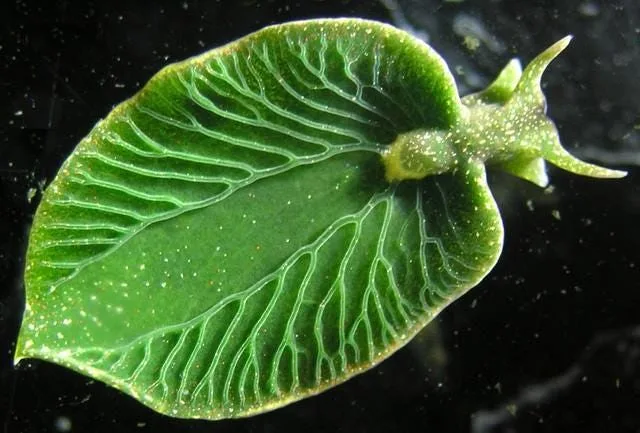
Professor Sidney K. Pierce of University of South Florida who investigated the molecular biology of the intracellular symbiosis between the digestive cells of a sea slug and algal chloroplasts believes endogenous retroviruses may play a key role in synchronizing the life cycle of the slug population as well as providing the means by which algal genes have been moved into the slug DNA. On his university profile page, Dr. Pierce indicates: “Transfer of genes between multicellular organisms has never been demonstrated before, so these species of sea slug may be a very useful model system to understand how such an important phenomenon could occur.”
Humans have also co-evolved with microbes and viruses although in recent years we have focused on eradicating many of them. There is much we do not know about the role of microorganisms in the evolution of life and our innate and adaptive immune systems. But scientists are now starting to see …”
You can read more in my upcoming book.
[i] Saracino, Vanina. “A Viable Planetary Future beyond Extraction, Predation & Production.” Strelka Mag, June 2020.