
Part II: Root Causes of Mental Illness and Neurodegenerative Diseases, in Simple Terms
The Knowledge You Need to Prevent/Reverse Neurodegenerative Diseases
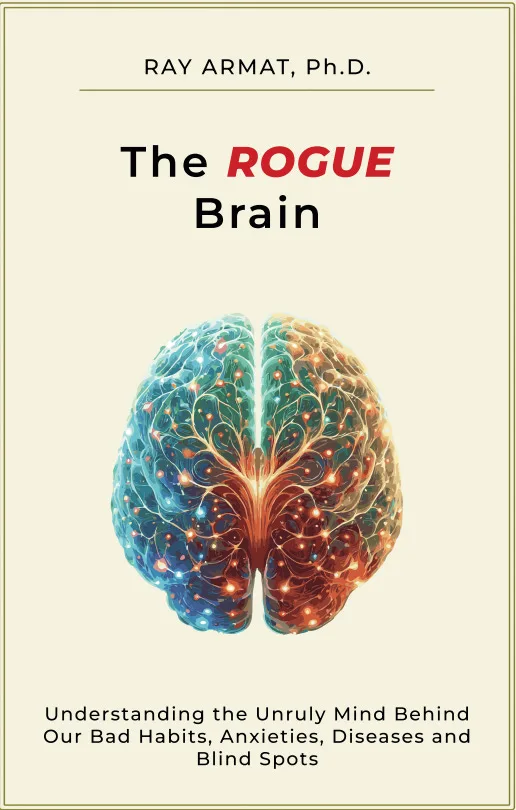
In Part I, we discussed the importance of healthy nerves, healthy blood and healthy blood flow in preventing damage to our neurons (neurodegeneration). Here we continue with three other factors, and some practical suggestions of what would I do if my family members suffered from some mental health issues. I am using the cover of one of my books here because the image shows the overexcitation of neurons in the human brain, which was discussed in part I.
- Mitochondrial Problems: As explained earlier, neurons, like most other cells in our body, convert glucose and fat into energy units (called ATP) using generators called mitochondria. Our cells constantly check the “energy” content of the blood and either ramp up or slow down the mitochondria generators in metabolizing glucose and fatty acids into energy. While drugs like Metformin stimulate uptake of glucose, they are also usually mitochondrial inhibitors, which means they make our energy generators work less efficiently, thus making less energy available to the neurons. Interestingly, many of the same chemicals and drugs that cause excitotoxicity in our neurons (see Part I of the article), once they cross the blood-brain-barrier (see below) act as mitochondrial inhibitors. In other words, a triple-whammy against our brain. To educate yourself more about natural ways to avoid mitochondrial inhibitors and maintain your blood glucose you can read my article: Natural Alternatives to Metformin? What is AMPK? And Dangers of Chronically Boosting it? Science today is complex, sponsored for profit and politicized. Guided by his God-given conscience and not politics/profits, Ray Armat, Ph.D. is an unsponsored polymath, former NASA grantee and an independent farmer, dedicated to share useful uncensored simplified science. You can encourage him by sharing these articles and by subscribing (free or by donation)SubscribeAccording to Dr. Peter Rogers (radiologist and nutritionist), the list of mitochondrial disruptors are long and includes: Lipid Overload (High-Fat Diet, specifically from seed oils and fatty animal products), Metals (lead, aluminum, iron overload from supplements or red meat), drugs (antibiotics, Statins, Metformin, SSRI antidepressants, Metoprolol, Aspirin, etc.), Pesticides & Herbicides (like Atrazine and Glyphosate). Rogers argues these compounds are a major contributor to dementia because they not only cause lipid peroxidation and mitochondrial inhibition, they also cause excitotoxicity and therefore metabolically starve the brain neurons (less oxygen and glucose) especially when diets high in fat (seed oils and animal fat), facilitate atherosclerosis and blood clot formation (red blood cells aggregation). He explains his theory in a series of videos such as this one:He has a more detailed video, which may be too technical but provides a good review of science literature for those who like to learn more: Basically, he links neurotoxicity and neurodegeneration to calcium overload inside neurons:
- The Brain’s Immune System, what Dr. Martha Herbert (neurologist, neuroscientist) calls the “glymphatic” (glial cells and lymphatic) system, plays a major role in cleaning up any toxins, metabolic waste (gunk) and infectious agents. As a pediatric neurologist and author of The Autism Revolution, Dr. Herbert highlights that metabolic waste and inflammation generate “internal noise” that disrupts signal transmission between brain cells. A functioning glymphatic system reduces this noise, allowing healthy brain cells to be more sensitive to actual signals. She believes during non-REM sleep the brain disengages from active processing to focus on restorative “housekeeping”, where it flushes out neurotoxic products like amyloid-beta and distributes non-waste compounds like glucose and neurotransmitters. Her research focuses on “Total Load”—the accumulation of environmental stressors that can overwhelm the brain’s natural repair mechanisms. She recommends supporting glymphatic flow through non-pharmacological methods—such as adequate sleep and reduced toxic overload — as a key strategy to enhance brain resilience and promote recovery from chronic conditions.
- Blood-Brain-Barrier and Brain-Gut Axis: Before any toxins enter our brain, they have to first pass through our stomach or gut linings and then through blood brain barrier (BBB). Although these protective barriers have tight junctions designed to block entry of toxins into our blood and then brain, certain food or medicine ingredients that contain small fat-soluble or amphiphilic (fat- and water-loving substances) molecules can bypass these barriers. The list includes some healthy molecules needed by the body and brain in moderation such as glucose, amino acids (such as L-Tryptophan/Tyrosine), protective polyphenols (such as curcumin in turmeric, gingerol in ginger), Vitamins A,D,E,K, minerals (sodium/potassium/calcium). But the list also includes some of the toxins already listed as excitotoxins to our nerves and as mitochondrial disruptors, as well as denatured and synthetic molecules often toxic to the brain (and the mitochondria in neurons), such as ethanol (alcohol), short and medium chain fatty acids, caffeine/coffee, nicotine, most drugs (aspirin, anxiolytic, antidepressants, opioids, NSAID, etc.). Denatured amino acids and undigested peptides and proteins can also permeate through our gut linings and cause auto-immune conditions (in which the body attacks itself) including neurodegeneration.The following is a slide from one of my presentations (free seminars) that shows molecules like alcohol and caffeine (in coffee) don’t even wait to enter our intestines and start entering our blood and then our brain directly from the stomach (first stage of digestion):
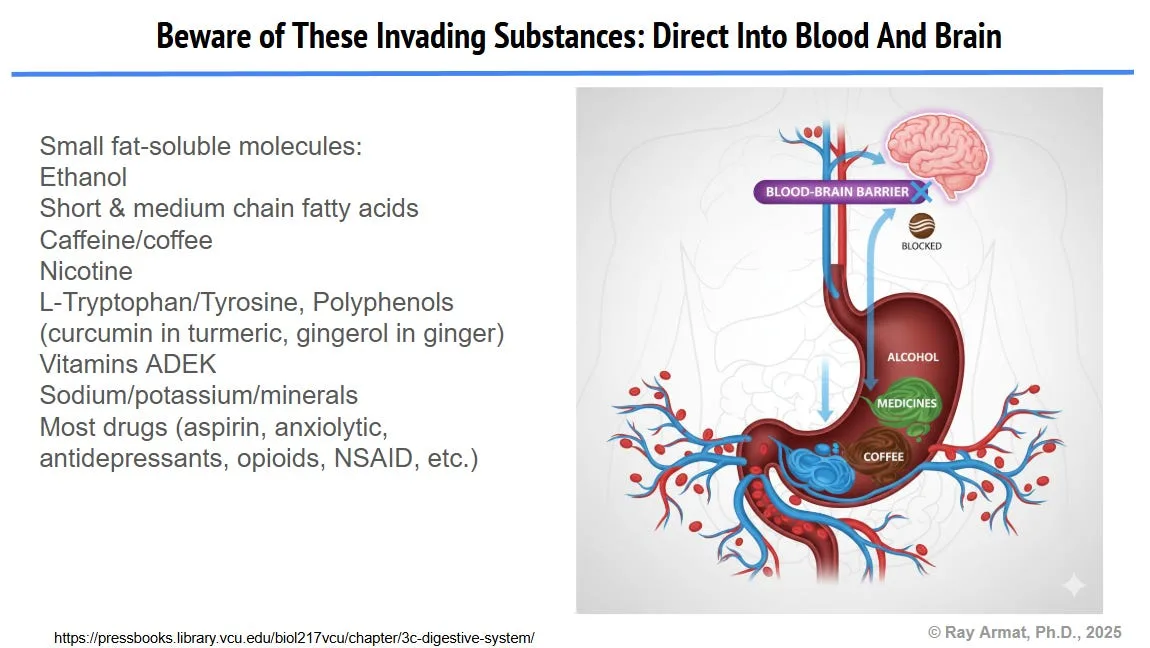
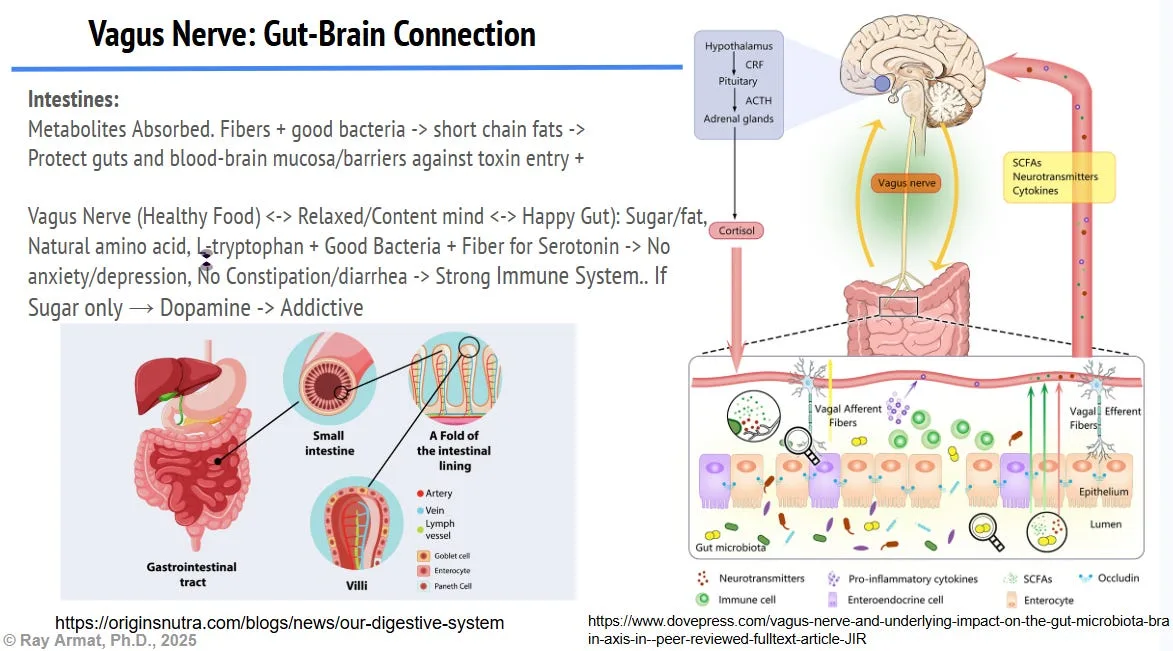
Obviously, for consumers of alcohol, coffee and medicines, and people exposed to environmental toxins such as chemicals, solvents, fumes and pesticides, the digestive tract (stomach and intestines) are the first line of defense against entry of these harmful molecules into the blood and then the brain space. It has been shown in recent years that the gut-brain axis plays a key role in protecting us against all kinds of toxins and stressors both in the brain and in the gut. Many scientists now call our guts our “second brain” because our digestive tract has the highest number of nerves (neurons) next to our brain. What is the wisdom? Here is what seems to be happening:
The cells in healthy intestinal walls have tight junctions that only allow small (digested) molecules like glucose, amino acids, short chain fats into the blood stream. When we consume soluble fiber in our food (as in organic vegetables, beans, oats, sweet potato, etc. as indicated in my recent article Part III: What is in the Milk You Drink? An Eye-Opening Education), short-chain fatty acids (SCFAs) are produced by fiber fermentation (by healthy gut bacteria). These small fat molecules, such as acetate and butyrate, strengthen the gut lining and reduce gut permeability (”leaky gut”) by enhancing tight junction integrity, promoting mucus production (the protective, gel-like layer over the intestinal cells), and providing energy to colonocytes (intestinal cells) for a healthy and regenerative epithelium (surface layer of cells that need to regenerate as we age). These short chain fatty acids, made from soluble fiber, with the help of healthy gut bacteria, also regulate immune cells and reduce intestinal inflammation, and by lowering the pH in the colon, inhibit the growth of pathogenic bacteria. So as you see, to prevent leaky guts, which many scientists now believe is a root of many auto-immune and neurodegenerative diseases, we need (1) Soluble fiber in our diet, (2) Healthy bacteria/microbiome in our intestines. Unfortunately, much of processed and chemically sprayed food (with pesticides) lack healthy soluble fibers, healthy bacteria, or both. Many conventional food ingredients, including residual chemicals and pesticides, harm our gut’s healthy microbiota.
The human gut is a major reservoir of trillions of commensal Gram-negative bacteria producing lipopolysaccharides (LPS, introduced in Part I of the article as an neuro excitotoxin and endotoxins), which can enter the bloodstream if the intestinal barrier is compromised, a condition known as endotoxemia. Our gut health and intestinal tight junctions are very important to our physical and brain health.
The All-Important L-Tryptophan and Serotonin
Small fat molecules produced from fermentation of dietary fiber by gut microbes, not only protect our intestinal lining but also help produce an all-important molecule called serotonin, which signals a nerve directly connected to our brain (called the Vagus nerve) to inform the central nervous system to relax and digest (enhance motility of intestines to pass the food through via peristaltic reflex). Proper levels of serotonin both in the gut and in the brain are important for improving mental health. Abnormal serotonin levels have also been found to cause a variety of psychiatric illnesses.
The molecule which our body uses to produce serotonin is tryptophan, which is an essential amino acid, meaning the human body cannot produce it and it must be obtained through diet. L-tryptophan which is the natural helpful form is not available in denatured/sprayed food. It is vital for synthesizing proteins, neurotransmitters like serotonin (regulating mood) and melatonin (regulating sleep), and niacin (vitamin B3).
Although approximately 90% of the body’s serotonin is produced and located in the gastrointestinal tract (GIT), while 10% can be found in the central nervous system and brain, the neurotransmitter is widely recognized for its significant involvement in the development and progression of various neurological disorders. Serotonin exerts a profound influence on both brain and gastrointestinal (GI) functions.
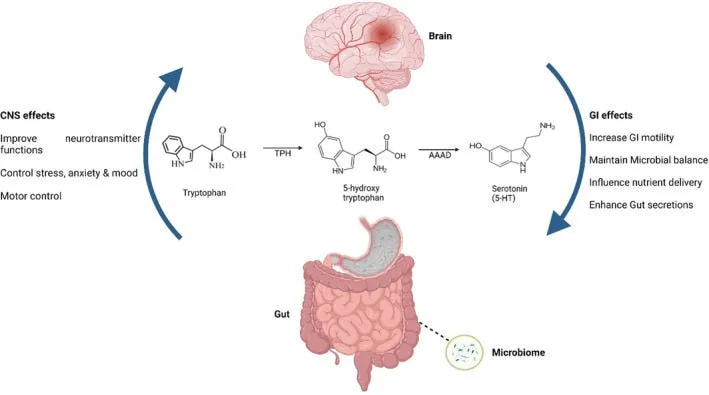
When gut serotonin levels are insufficient, the intestinal lining may weaken, contributing to intestinal permeability or “leaky gut”. A leaky gut, in return, can cause chronic inflammation, leading to depletion of tryptophan (the building block for serotonin), which may reduce serotonin production and affect both brain and gut health. This is another vicious circle leading to both gut and brain diseases.
The toning and health of the Vagus nerve, directly impacting and connecting both our digestive health and our brain health, can improve with:
- Conscious yoga-type breathing: Deep, slow diaphragmatic breathing
- Cold exposure: such as splashing cold water on the face that activates the diving reflex
- Humming or singing or gargling water deeply/loudly for a few minutes daily. This is because the Vagus nerve passes through the throat
- Healthy laughter and pleasant relaxed fellowship with people who care and are peaceful, happy and relaxed
- Regular walking and exercise, especially in sunlight: Sunlight exposure boosts serotonin levels and helps regulate circadian rhythms (for better sleep). That is why serotonin levels (and good mood and relaxed digestions) are often higher in summer.
- Avoiding chronic stress and taking frequent relaxation and stress isolation breaks: Chronic stress elevates cortisol, which depletes serotonin in the body
- Diets rich in L-Tryptophan, healthy fats (unsprayed, fresh-hulled seeds and nuts) plus fermented food with healthy bacteria
Actually, many of these interventions are now shown to increase the beneficial molecule called Brain-Derived Neurotrophic Factor (BDNF), a protein acting as a “fertilizer” for the brain, crucial for the survival, growth, and maintenance of neurons. It enhances neuroplasticity—the brain’s ability to adapt—and is vital for memory, learning, and higher thinking.
What Would I do if my Family Members Suffered from a Neurodegenerative Disease?
This is not medical advice, just some non-medical steps I would take and monitor the symptoms of the disease (for example memory improvement in the case of dementia, mood improvement in the case of depression, movement improvement in the case of Parkinson’s, etc., plus overall signs like improved digestion/appetite, sleep, etc.):
- Stop feeding them any sprayed, high sugar, processed food with synthetic additives (boxed cereals, pills, pre-mixed cake mixes, chips, bottled drinks, etc.). For those who read the Bible, you should check the story of Prophet Daniel, one of the earliest recorded examples of becoming healthy by avoiding processed food, cakes, delicacies, wine and maybe even meat!
- To avoid denatured proteins/meat/milk from stressed animals, I would minimize all animal-based products except eggs from happy healthy pasture-raised (naturally-born) chickens (read my article on An Eye-Opening Guide to Eggs, Their Colors and Nutrition).
- Make home-made fresh foods using healthy sources of unsprayed, heirloom varieties of open-pollinated heirloom varieties of hard corn (high in L-tryptophan.. we are growing our own but it can be found with due diligence), legumes (lentils, beans.. we buy organic brands harvested in the US), grains (oat, barley, rye.. we buy organic type harvested in the US), and vegetables (like sweet potato we grow our own) all rich in soluble fiber.
- I would complement L-tryptophan and soluble fiber in their food with fermented food like Sauerkraut or Kefir (using raw milk from healthy pasture-raised cows) to improve their microbiome.
- In hard-to-treat cases, I “may” try the combination of plant-based supplement 5-HTP (5-Hydroxytryptophan) from companies like TriQuetra and saffron (best are Persian sources but beware of fake products in the market. A very small amount is needed of this most expensive spice in the world. For more information, please read my article A Spice with Anti-Cancer, Anti-Depressant Properties: The Benefits of the World’s Most Expensive Spice), recommended by Dr. Daniel Amen to naturally boost serotonin levels, which enhances mood, reduces anxiety, supports emotional balance and reduces OCD (Obsessive Compulsive Disorder). Obsessions—thoughts that are anxiety-provoking (such as fears of germs, thoughts of violence, or mental images of forbidden sexuality), Compulsions—repetitive behaviors (such as excessive hand-washing, cleaning, or counting) that provide no pleasure but alleviate the anxiety of the obsessions. He says “Growing body of scientific evidence shows that certain nutritional supplements, such as 5-HTP (5-hydroxytryptophan) and saffron, can increase serotonin to calm the brain.”
- I would feed them unsprayed, fresh-hulled nuts and seeds (pumpkin, squash, sunflower), which are amazing sources of healthy fat (satiating), proteins and amino acids (the important L-Tryptophan, melatonin, serotonin). We collect our own black walnuts every year, dehull and dry them and crack them in small amounts, every other day, throughout winter and spring.
- I would ensure they get plenty of quality sleep, early at night (not after 10 PM), with no digital or blue lights or even strong house lights after 8 PM, and get them tired by walking outdoors, if possible, in the late afternoon sunlight. Sleep deprivation reduces serotonin receptors and overexcites neurons. I would not serve them any coffee or stimulants or artificial food additives or any of the foods we listed in Part I as excitotoxins. Instead, foods high in L-tryptophan and a relaxed/toned Vagus nerve help with sleep too so please check the previous recommendations on toning the Vagus nerve and feeding foods high in L-Tryptophan and fermented food. Many natural-grown unsprayed raw vegetables and fruits have melatonin, which helps with sleep too. We use organic lemons from the US as a regular addition to many of our protein-based foods (beans and occasional ocean-caught fish). Lemons, together with healthy doses of vegetables help the body become more alkaline and resist cancer cells and runaway inflammations.
- Undertreatment of blood pressure can lead to strokes and blood clots and overtreatment (with blood pressure medicine) can lead to low blood flow to the brain. Baby Aspirins are used by some people (like President Trump) to keep their blood thin but there could be serious side effects such as bleeding in the stomach, intestines or the brain (stroke). They are many “natural” blood thinner that can be used (but not together with existing blood pressure medications) and I listed them in the article Rat Poisons or Blood Thinners? Everyone Should Learn These Life-Saving Facts About Blood Flow. You May Not Hear this Eye-Opening Education at Your Doctor’s Office.). I highly advise you read that article to understand the importance of balanced blood pressure in brain and heart health. Some of the natural ways are also listed in the slide below too.
- I would keep them away from all sorts of chemicals (plenty in cheap household detergents, soaps, shampoos, lotions, air-fresheners, or chemicals used in mechanic shops, machine shops, hair salons, in paint, supplements, medicines, near sprayed farms, etc.). These chemicals are not good for anyone, unless they want to get an early dementia!
- I would feed them some foods that break down proteins, clots and amyloid plaques, such as Nattokinase, organic Papaya (papain), pineapple (bromelain), or kiwifruit (actinidin), which are rich in proteolytic enzymes, and foods rich in polyphenols like curcumin (organic turmeric) and dark colored berries, grapes (again unsprayed).
- I would ensure they go through detoxification, for example by sweating while working in natural sunlight (like farming), of course if their health condition allows the detoxification. Herbs are God’s free gift to us for detoxification. They are free (if you look for them in unsprayed uncontaminated areas) and should be used in moderation. Examples are basil, mint, dandelion, nettle, clover, thyme, sage, etc. (You can read my article Learn these Facts before Using Garlic as a Magic Food and The Wisdom of Using Colors in Nature to Improve Our Health: Learn How You Can Improve Your Health with Certain Vegetables. Some potent spices and herbs like turmeric and saffron are not easily found in local meadows and yards but can be bought in organic (unsprayed form) from trusted sources. They are other detoxification foods and techniques I have listed in my book The Right Way to Eat.
In summary, our gut, blood vessels and Vagus nerve are gatekeepers and conditioners of our neurons in the brain which help us learn, memorize and think. Too much seed oils (from sprayed seeds and extracted with chemical solvents), animal based products and fat, processed/denatured food, artificial additives, chemicals in our environment (shops, farms, kitchen, bath), and sprayed grains/flour, vegetable and fruits harm these gatekeepers. At the same time, the same chemicals plus psychological and chronic stressors, cause our neurons to be overly excited and fire too much, like an idling engine that would wear out over time. The gunk and metabolic waste from this overheated engine accumulates over time in the tight and precious spaces inside the brain. The protective coatings of the neurons, gut lining and blood brain barrier would all wear out over time with modern foods and lifestyle. Good bacteria which are our friends in metabolizing waste and producing beneficial molecules become dead. Constipation or diarrhea are early signs of these imbalances. In my books, articles and seminars, I call the 4 Ss of metabolic imbalance — Disruption in our Stool, Sleep, Senses and Sexual behavior — as early markers of metabolic imbalance. We often do not need expensive lab tests to see we are becoming imbalanced. In fact, much of the knowledge shared in this article (2 parts) can be applied to gut health as well as brain health, auto-immune disorders as well as cancers, etc.
This article is my gift to seekers like you. It takes a lot of time to research and write these articles. I did my part. You can do yours by sharing the articles to expand our network of critical thinkers.
The good news is, all this is reversible and preventable, but it takes time, knowledge, discipline, patience and thoughtful choices in life. It reminds me of the Bible verse Matthew 7:14 “But small is the gate and narrow the road that leads to life, and only a few find it.”
Some of my Sources:
Mismatch autism (noise overwhelmed), parkinson’s, Alzheimer’s, etc.
https://www.sciencedirect.com/science/article/pii/S0300483X14000493
https://pmc.ncbi.nlm.nih.gov/articles/PMC10867509/
https://originsnutra.com/blogs/news/our-digestive-system
https://www.sciencedirect.com/topics/medicine-and-dentistry/excitotoxin
https://pmc.ncbi.nlm.nih.gov/articles/PMC5783861/
AMPK, is a crucial enzyme that acts as a cellular energy sensor, activating when energy levels are low and inhibiting energy-consuming processes to restore balance. It stimulates glucose and fatty acid uptake and oxidation to produce energy while suppressing processes like protein and lipid synthesis.
Certain pesticides inhibit the Shikimate pathway which produces L-tryptophan in plants with the help of beneficial bacteria (often killed by pesticides too).