
Macular Degeneration: What Happens and What are the Risks of Injections?
Eye-Opening Education
Spending 30 minutes to read and understand this article can save you and your loved ones (suffering from pre-diabetes, and diabetes-related eye issues such as macular degeneration) potential heart aches and headaches.
As explained in my earlier article (Rat Poisons or Blood Thinners? Everyone Should Learn These Life-Saving Facts About Blood Flow. You May Not Hear this Eye-Opening Education at Your Doctor’s Office), many diseases start when certain conditions lead to “thickening” of the blood and blood vessels. In a healthy person, blood vessels, particularly tiny ones called capillaries, remain flexible and porous and deliver adequate glucose, fat and oxygen for our cells to breathe and generate energy to function, repair and rejuvenate. Yet systemic metabolic disorders/diseases such as diabetes (too much insulin/glucose in the blood), hypertension (high blood pressure) and thrombosis (blood clots) often cause damages to our blood vessels, such as stiffening or thickening them, which lead to less nutrient and oxygen flow (hypoxia) from the blood to our cells. The small blood vessels in the back of our eyes (retina) are among the most sensitive to this condition and to vascular occlusion (blockage as in blood clots) and ischemia (restricted blood flow).
When our body senses poor blood flow, blood clots, hypoxia (inadequate oxygen flow) or damages to the vascular endothelium (vascular means blood vessels and endothelium means the inner layer), it activates signaling molecules that trigger a chain of events to build new pathways to oxygenate the blockaded cell. After all, oxygen means life.
Science today is complex, sponsored for profit and politicized. Guided by his God-given conscience and not politics/profits, Ray Armat, Ph.D. is an unsponsored polymath, former NASA grantee and an independent farmer, dedicated to share useful uncensored simplified science. You can encourage him by sharing these articles and by subscribing (free or by donation).
Two important hypoxia signaling molecules are:
- Nitric oxide (NO) that causes widening and permeability of blood vessels (vasodilation), relaxation of smooth muscle cells (flexible elastic blood vessels), and inhibition of platelet aggregation (stickiness of blood).
- Vascular Endothelial Growth Factor (VEGF), which is a signaling protein produced by cells that stimulates the formation of new blood vessels, a process known as angiogenesis. It acts as a crucial regulator for creating vessels in developing embryos, repairing injured tissue, and increasing blood supply to tissues deprived of oxygen (hypoxia) such as those in our eyes (retina). In fact, VEGF is essential for the survival of retinal endothelial cells. Experimental studies in animals show that local inhibition of VEGF causes thinning andatrophy of the choriocapillaris and degeneration of photoreceptors.
With insulin-resistance (diabetes type II), blood vessels, including those in eyes and retina, will release VEGF but not enough nitric oxide, which means new blood vessels will try to form but will be stiff and may bleed. The microaneurysms (small bleeding) developing at the edge of retinal areas are regarded as unsuccessful attempts to give rise to new-vessels, and a sign of diabetic retinopathy (diseases of retina associated with diabetes). Prolonged bleeding can lead to retinal edema (swelling) or detachment, degeneration of macula — the central part of the retina responsible for sharp, detailed straight-ahead vision— , the so-called Macular Degeneration (MD). The “wet” type of MD, which involves bleeding and rapid detachment of retina, can cause loss of “central” vision (affecting the ability to read or drive), blurry or distorted vision (wavy lines). The loss of “central” vision usually does not affect peripheral (side) vision which allows for continued navigation and engagement with the world.
Injections and Risks of Injections
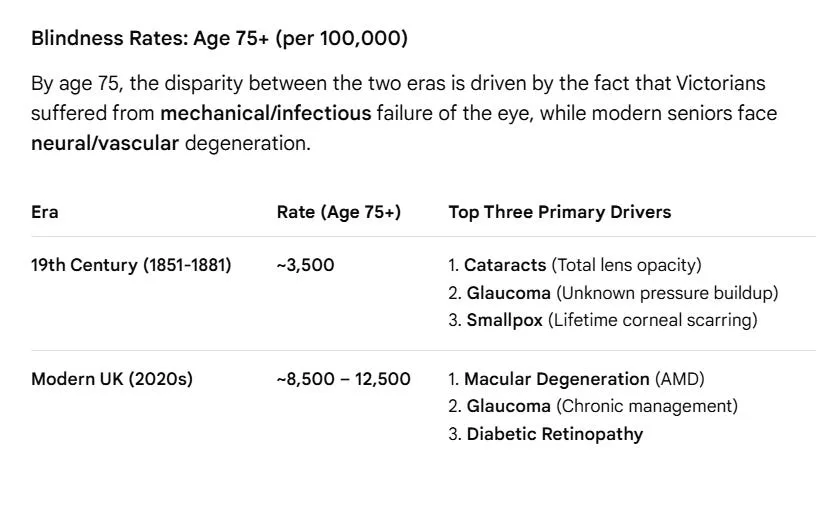
Despite modern medical interventions/injections, the risk of old-age blindness is about 3-4 times higher today than it was some 150 years ago, as evidenced by historic “prevalence” rate data from England. In fact, if we exclude childhood or early-life infections and small pox scars (which are rare today), very few people went blind from what we call today as “age-related” causes in need of injections and medical interventions. In other words, it is not the age but lifestyle and diet factors which seem to play the key roles in the genesis (and treatment) of retinopathy.
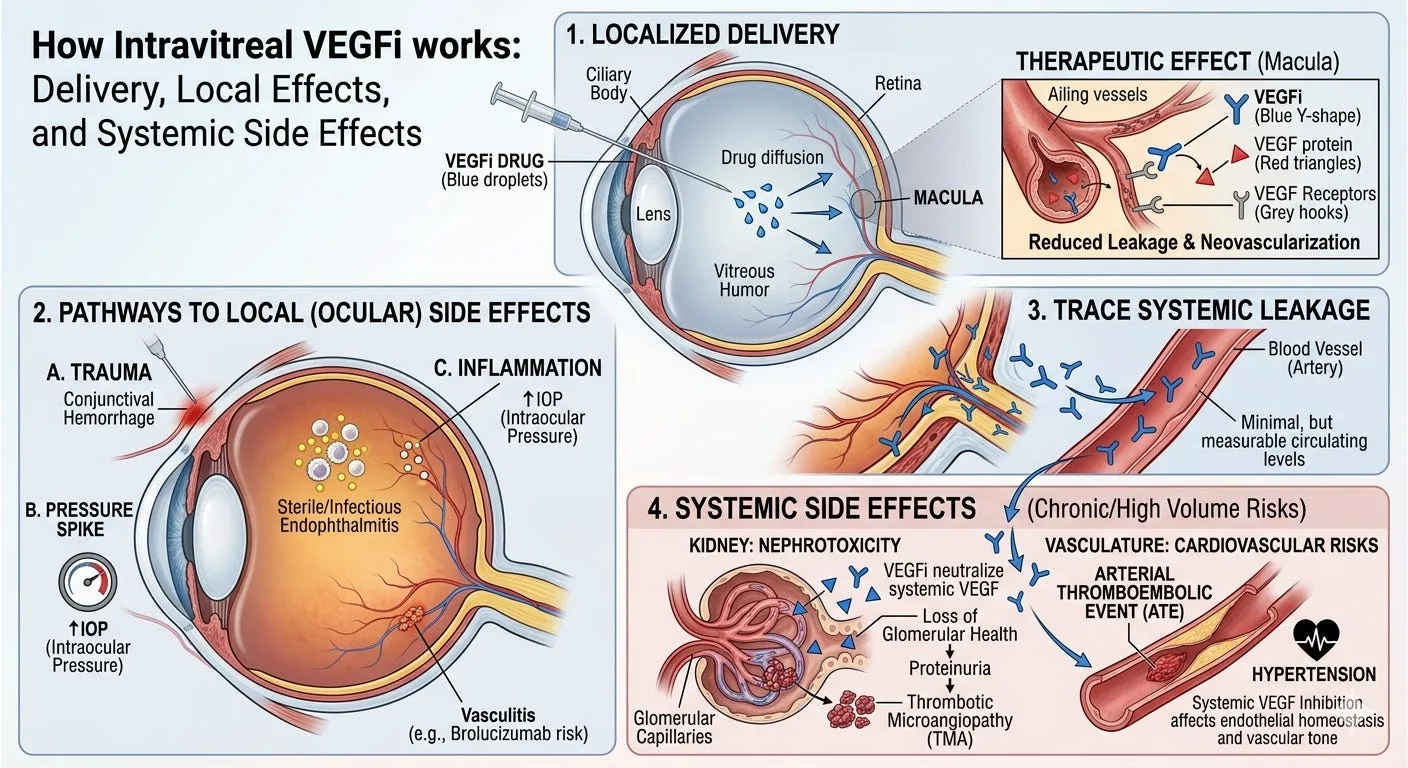
The main intervention (biohack) to fight macular degeneration is to block VEGF with Anti-VEGF injections. These drugs were initially introduced to fight cancer because cancer cells are known to trigger VEGF and angiogenesis (new blood vessels). The drug designs were later repurposed for intraocular administration (injection) in the treatment of macular degeneration and diabetic retinopathy.
Prolonged systemic administration of anti-VEGF agents in oncology (cancer treatment) can lead to increased risk of arterial hypertension and embolism (blood clots). because:
- The VEGF keeps endothelial cells healthy. Blocking it leads to prevention of repairs and promotion of cell death and damage, exposing the underlying thrombogenic (clot-promoting) sub-endothelial matrix.
- Reduced Vasodilators: Inhibition decreases production of nitric oxide, which normally act to dilate blood vessels and prevent platelet aggregation. Remember, nitric oxide is already in short supply in people with unhealthy blood vessels.
- Anti-VEGF agents can increase blood viscosity by elevating hepatic production of erythropoietin, leading to higher hematocrit levels (red blood cells), which contributes to thrombosis. Again, to understand blood viscosity, please read my article on blood thinner (listed in references).
But these risks are not only limited to cancer treatment. Circulating VEGF protects blood vessel integrity, promotes their survival and protects cardiomyocytes (heart muscle cells) from injury. Because anti-VEGF compounds can cross the blood-retina barrier and enter the systemic circulation, and inhibit serum VEGF, anti-VEGF eye (intraocular) injections may also increase cardiovascular events such as damage to cardiomyocytes, a decline in cardiac function, and even heart attacks in patients with metabolic disorders such as diabetes. Generally, prolonged anti-VEGF treatments could induce dangerous thromboembolic (blood clotting) such as heart attacks, strokes and dementia.
The main two anti-VEGF injections in America are:
- Bevacizumab (Avastin) is an antibody developed from mouse (“murine”) cells genetically engineered to replace most of the mouse antibody with human components.
- Aflibercept (Eylea) is based on genetic engineering of protein DNAs from Chinese Hamster Ovary (CHO) K1 cells.
These are costly drugs, particularly Eylea which costs around $2500 per treatment usually every 4-8 weeks.
I have already written about risks associated with genetically-engineered products from animal cell lines (In my article Dog or Monkey Kidneys, Chicken or Human Embryos? The Untold Dark Side of Genetic Engineering):
Dog or Monkey Kidneys, Chicken or Human Embryos?
Many Americans were outraged when Donald Trump claimed dogs are slaughtered for food by some illegal immigrants, yet few realize dogs, as well other animals like monkeys and rabbits, are regularly sl…
Apart from those risks, because drugs like Eylea and Avastin enter systemic circulation and maintain high plasma (blood) levels in the whole body for as long as 30 days after injection, the reduction in plasma VEGF levels may increase cardiovascular risks. Eylea results in the greatest reduction of VEGF levels in the blood.
Research by Kamba et al shows a decrease in both nitric oxide and prostacyclin after systemic anti-VEGF administration, is accompanied by increased arterial pressure and endothelial cell detachment, both favoring thrombotic events (blood clot formations, dementia, heart attacks or strokes). Sobolewska et al have also shown a potential risk of thromboembolic events for Aflibercept (Eylea) injections.
In 2016, Avery and Gordon reported increased risks of 250-300% in cardiovascular accidents and death from all causes in diabetic patients treated with Aflibercept (Eylea) compared to laser or sham.
In addition to these systemic risks (Thromboembolic blood clotting events like strokes, heart attacks and dementia), official data from the VIVID, VISTA, and PANORAMA clinical trials evaluating standard Eylea for diabetic eye disease show the following as common “localized” ocular (eye) side-effects: Eye pain (9%), cataracts (8%), Vitreous Detachment (7%), conjunctival hemorrhage/bleeding (28%), and elevated intraocular pressure (5%, Sustained elevation in eye pressure can occur over time, particularly with continued treatments).
While subconjunctival hemorrhage (red eye) is common, the cumulative risk of infection rises with the number of injections, requiring vigilant monitoring for pain and vision loss. The risk of infection per injection increases with the total number of injections especially in diabetic patients who can exhibit slower healing or altered local immunity.
Because most risk assessment trials are sponsored by pharmaceutical companies for registration purposes, they include potential systemic biases. For example, in VIVID and VISTA adverse effects were not related to Aflibercept (Eylea) if they occurred 30 or more days after the last injection even if we know that, as mentioned above, the drug is still present in the blood. Other potential biases include the facts that patients enrolled in clinical trials, and therefore in the meta-analyses that followed, are often not representative of people subjected to intravitreal treatments in real life.
Other systemic risks associated with anti-VEGF injections (which can be cumulative and add up over time to other lifestyle, food, environmental or drug risks):
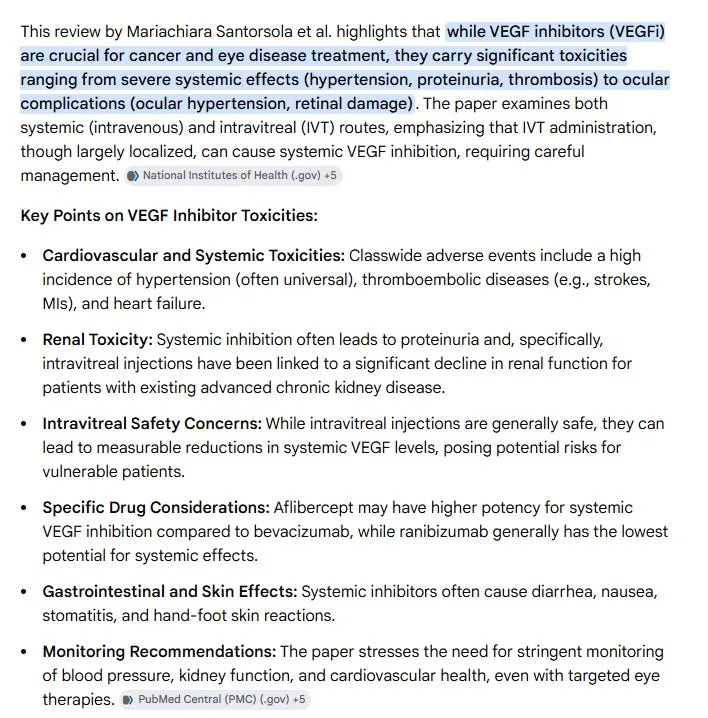
- Renal Toxicity: Systemic inhibition often leads to proteinuria and, specifically, intravitreal injections have been linked to a significant decline in renal function for patients with existing advanced chronic kidney disease.
- Hypertension: Increase in blood pressure is nearly universal with VEGF inhibitor therapy according to a paper by Rhian M. Touyzet al. Almost all clinical trials have demonstrated that VSP inhibitors cause an increase in blood pressure (in 30-80% of patients) and blood clots (3-6% heart attacks or strokes, and 5-14% Deep vein or pulmonary embolism).
- Intravitreal injections can lead to measurable reductions in systemic VEGF levels, posing potential risks such as bacterial infections, vascular damage, immune reactions and intraocular (inside the eye) pressure for vulnerable patients.
- Specific Drug Considerations: Aflibercept (Eylea) may have higher potency for systemic VEGF inhibition compared to Bevacizumab (Avastin), and ranibizumab (Lucentis) may offer the lowest potential for systemic effects.
- Gastrointestinal and Skin Effects: Systemic inhibitors often cause diarrhea, nausea, stomatitis, and hand-foot skin reactions.
As you can see from an AI summary of a paper by Mariachiara Santorsolaet al:
This article is my gift to seekers like you. It took me about three hours to research and write it. I did my part. Would you do your part by spending 5 minutes to share it with 5 friends so we can serve others and expand our network of critical thinkers?
What are Some Natural Ways to Improve Vascular Health?
So we learned that macular degeneration is a vascular disorder, often rooted in metabolic disorders such as diabetes. You can read my other articles (on Substack) or books (on Amazon) about natural ways to maintain metabolic balance (prevent diabetes, hypertension, etc.). I also highly recommend reading my article (below) about natural ways to avoid thick blood (and blood vessels):
Rat Poisons or Blood Thinners? Everyone Should Learn These Life-Saving Facts About Blood Flow
A good friend of mine, like many many others, was recently put on a blood thinner medication due to being at a high risk of heart attack. Although he is a capable “fluid mechanics” expert, he seemed …
And to avoid other blood flow issues to the brain, here is some education and practical tips:
Root Causes of Mental Illness and Neurodegenerative Diseases, in Simple Terms: Part I
A simple AI search shows us that more than two thirds of Americans suffer from mental and neurodegenerative disorders including dementia/Alzheimer’s (at least 8 million), Parkinson’s, Multiple Sclero…
References:
https://iris.unito.it/bitstream/2318/1723677/1/AntiVEGF%20for%20IAEM%20revised%20unmarked.pdf
https://www.mdpi.com/2072-6694/16/2/350
https://pmc.ncbi.nlm.nih.gov/articles/PMC5825002/
https://simplescience.substack.com/p/rat-poisons-or-blood-thinners-everyone
https://link.springer.com/article/10.1007/s11912-012-0242-z
https://www.sciencedirect.com/science/article/pii/S1933171118300767
My Humble Request:
This article is my gift to seekers like you. It took me about 3 hours to research and write it without any sponsors or getting paid. I did my part. Would you do your part by spending 5 minutes to share it with 5 friends so we can serve/educate others, and expand our network of critical thinkers?
The drug costs around $1800-$2000 per treatment. Doctors injecting Eylea receive an estimated payment of $114 from Medicare for intravitreal injections (CPT code 67028) plus reimbursement of 6% of drug’s Average Sales Price (ASP of around $2000) which is another $120, often plus regular office visit fees of $200-$300.