Gun Cabinet to Chicken Coop, Black Walnuts to Pies!
Why Haven't I Bogged for a While? Our Transition to Farm Life
I believe small scale organic or regenerative farms are a sustainable way to make a modest living for families while staying healthy and self-reliant, and protecting the planet (soil). This is partly based on the science of how our body and brain communicate with each other through feedback loops, which I explain in my book (Masks, Crutches, and Daggers: The Science of our Self-delusional, Addictive Homo economicus Brain).
Having considered the option for years, my family has finally decided to downsize our already small suburban home (to about 1600 square feet or 160 square meters) and start a small organic rural farm on a couple acres of land. It is a lot of work and we are learning a lot about how to live in harmony with nature (soil, climate, animals, etc.). I am learning to apply some of the scientific principles I learned in universities in a natural setting. I promise I will share our experiences and learning with you soon. For now, here are two of our recent activities:
True education is an orphan today because unsponsored science is not profitable. I spend hours to separate good science from bad, noise from signal. By subscribing (free or paid) you allow me to expand our network of critical thinkers as an alternative to corporate-sponsored publications.
Gun Cabinet to Chicken Coop
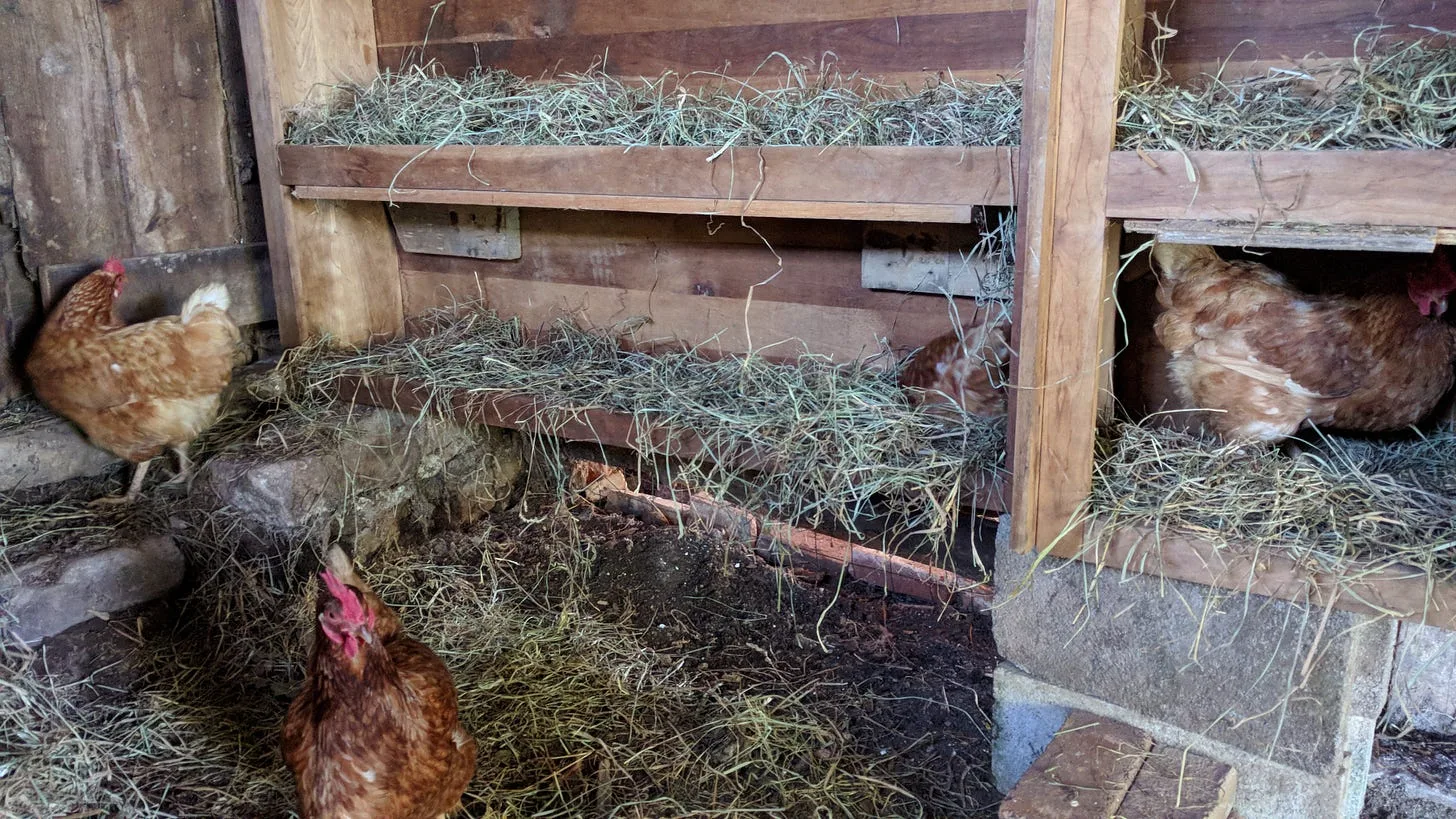
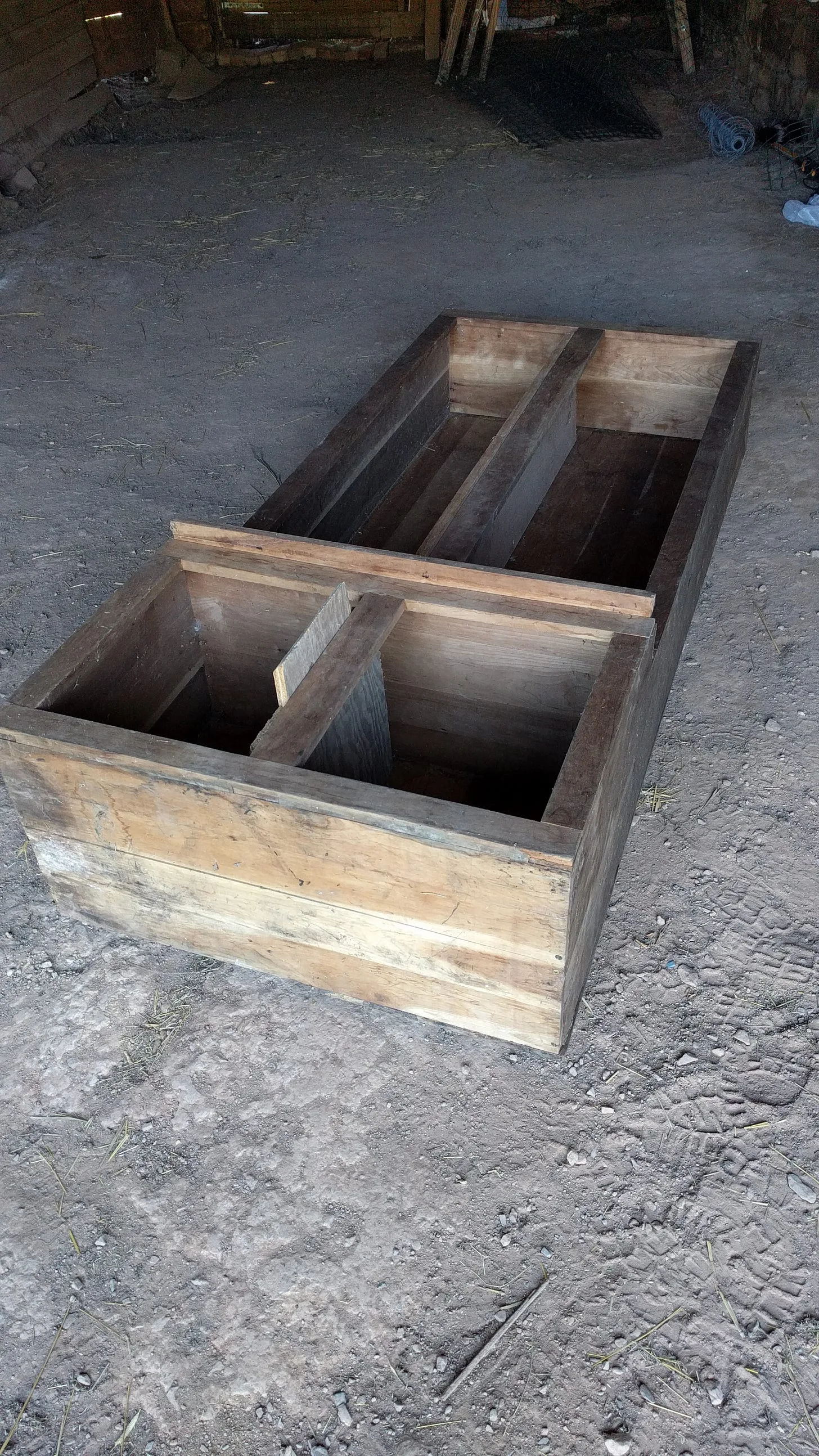
We found an old maple rifle cabinet in an old barn (see below). We are trying to conserve old materials and minimize waste, so we found a good use for the gun cabinet in our chicken coop. Adding a few dividers, and some locally grown organic hay to the rifle cabinet, and securing it with some 3” star drive flat-head deck screws, we now have a great warm bed for our (egg-laying) chickens who seem to love it.
And when you treat your chickens right, their eggs will treat you well. Our chickens are free range, organic feed, not congested and very happy. Beware of some eggs marketed as organic or cage-free, because organic could mean organic corn and feed but not entirely pasture-raised, and cage-free or free-range could mean large congested holding areas because the government does not have any requirements around what the outdoor environment should be like, or how much time chickens get to spend outdoors. In California, an enclosure containing nine (9) or more egg-laying hens shall provide a minimum of about 0.8 square feet of floor space per bird. Most other states do not even have such a requirement. Here are some interesting facts about chickens and eggs from Diffen:
At any given time, there are about 300 million egg-laying hens on farms in the U.S. A majority of these birds are kept in battery cages—small enclosures where several birds are crammed in. Caged birds suffer from poor living conditions—they have no room to move around, their stress levels are very high and, not surprisingly, they are aggressive toward each other. Cages are filthy, increasing the risk of bacterial infections and necessitating the use of antibiotics (which is bad practice when done on a precautionary basis rather than to treat an existing infection). Caged chickens, by definition, have almost no opportunity to live naturally, and sometimes share their cages with dead chickens. Caged chickens are usually kept battery cages their entire productive life; they can barely stand up, cannot spread their wings, and are denied natural behaviors like roosting, nesting, perching and bathing. Cage-free birds live in aviaries large enough to hold thousands of birds. These are industrial barns where there is about 1 square foot of space available per hen. A research study by the Coalition for Sustainable Egg Supply found that benefits of cage-free aviaries for the birds include more natural behavior, stronger bones and more feathers. But cage-free birds also face risks—mortality rate is much higher (slightly more than 10%) than caged birds (about 5%) because of pecking by other birds. And without access to the outdoors, the quality of indoor air in aviaries can be poor. Free-range in theory means cage-free with access to the outdoors. However, there is no other requirement around this access. While free-range chickens have some opportunity to experience natural behaviors, how much opportunity is entirely unregulated and unmonitored. In fact, a majority of free-range birds actually do not venture outdoors because the outdoor environment is often simply a fenced porch with little to no grass, bushes or worms. So in practice, free-range and cage-free provide the same living conditions. Pasture-raised chickens have the best living conditions among poultry farms today. They are not confined in cages or aviaries, spending most of their time outdoors where they have access to a natural diet of insects and worms. The organic label is tightly regulated. In order to qualify for this label, the chickens must be free-range (but not necessarily pasture-raised). must be fed an organic diet. For example, if they are fed corn feed then the corn should be organic and there should be no synthetic pesticides used in growing that corn. must not receive any hormones or antibiotics. What chickens eat and how much they are treated with hormones and antibiotics are the biggest influencers on the nutritional value, flavor, and even safety for human consumption of their eggs and meat. While there are no organizations monitoring the validity of caged and free-range chicken nutrition, the assumptions can be made that Grain fed chickens will have richer, fattier meat, Organic chickens will have more flavorful eggs with thicker shells, and flavorful meat with less fat and chemical additives, and 100% natural chicken meat and eggs will be healthier for human because the chickens will have lived on the best foods, without chemicals, and in healthy environments. However, if free-range chickens are living outdoors in polluted environments, they may be eating things from feces to industrial pollutants that make their meat and eggs less healthy than grain-fed battery-caged chickens.
Black Walnuts: Unrivaled Taste, Nutrition and Difficulty
We have several black walnut trees which we like to enjoy. Black walnut is highly prized for its dark-colored, straight grained, true heard wood. Many people sell their trees to saw mills for their valuable bole (the straight stem of tree) but we would rather enjoy the walnuts.
Black walnut is more resistant to frost than the English or Persian walnut. Black walnuts are nutritious by themselves (a great source of protein, fiber, Vitamins B and E, minerals such as copper, magnesium, manganese, phosphorous, selenium and zinc, plus linoleic and oleic fatty acids) and can be added to salads, fish, pork, chicken, vegetables and pasta dishes. but they can also be used in traditional treats, such as cakes, cookies, fudge, ice cream and pies, during the fall holiday season. Tapped in spring, the tree yields a sweet sap that can be drunk or concentrated into syrup or sugar that is not unlike the sap of sugar maple.
Black walnut drupes contain juglone (5-hydroxy-1,4-naphthoquinone), plumbagin (yellow quinone pigments), and tannin. These compounds cause walnuts to stain cars, sidewalks, porches, and patios, in addition to the hands of anyone attempting to shell them. The brownish-black dye was used by early American settlers to dye hair. Juglone is also known, when converted from hydrojuglone in the soil released from the tree roots, to be toxic to some plants and trees (like tomato and apple) as a defense mechanism for the walnut tree.
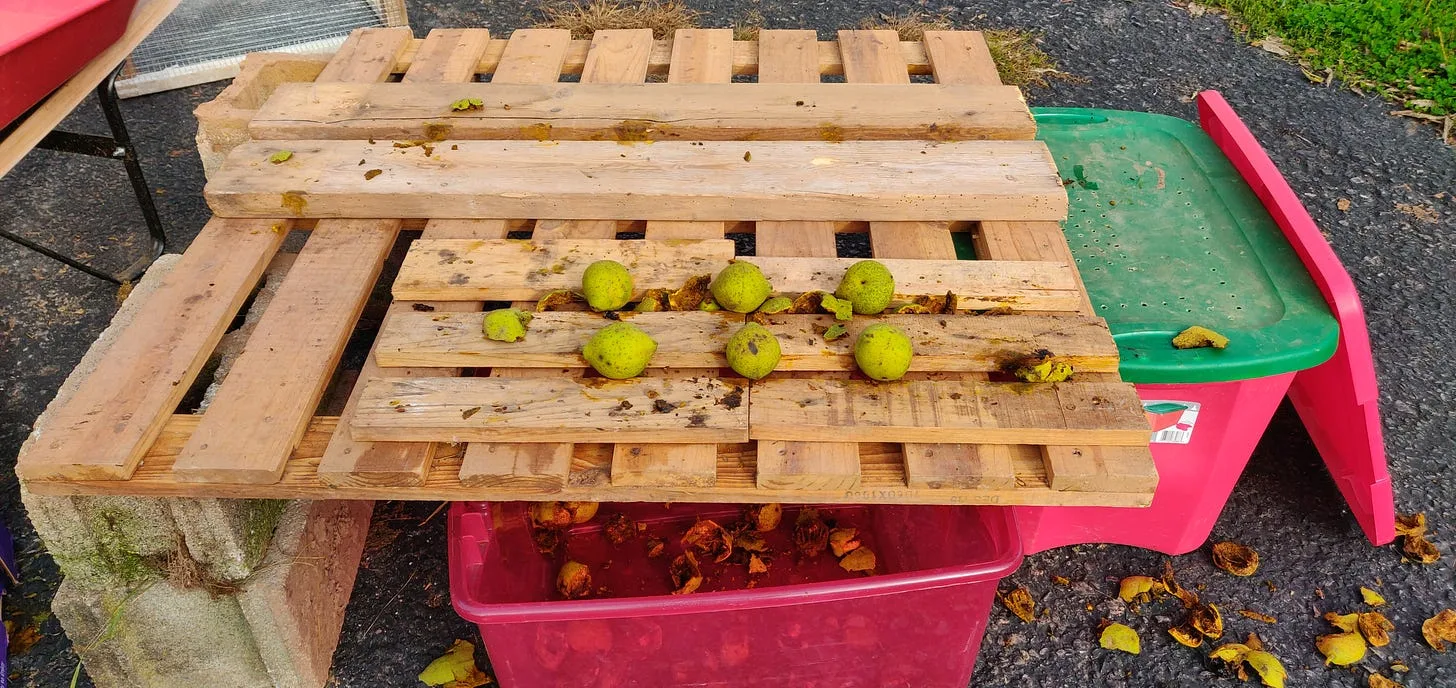
While the flavor and benefits of the Juglans nigra (black walnut) kernel is prized, the difficult extraction of the kernel from the fruit of the black walnut (the shell itself is thicker than that of the English walnut, and there are additional, thick internal walls tightly surrounding the nutmeat), discourages many people from enjoying this American delicacy. So we ended up designing a durable black walnut harvesting system by using old crates (to de-husk, as seen in the picture) and some window frames (to cure and dry after de-husking and washing).
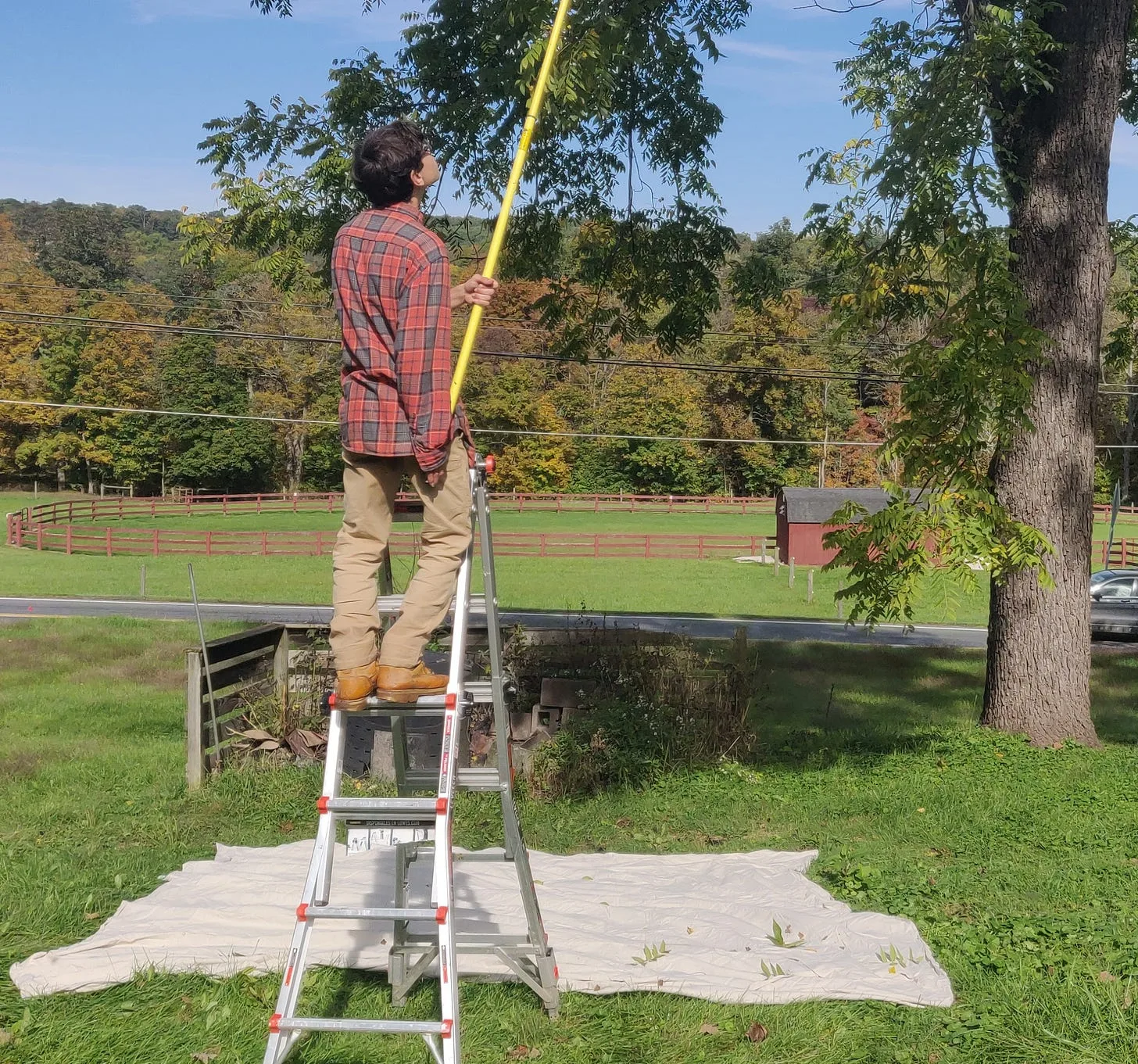
We enjoyed harvesting ripe yellow-green, slightly soft black walnuts, using a tarp and a long handle, or just picking them when they drop (see picture). We are now using our system to de-husk, wash, cure (dry) the walnuts. We are also trying to design our own shell-cracking system for when the walnuts are cured/dried (in 2-3 weeks). Walnuts are a lot easier to crack when dry.
These blogs are my gifts to my subscribers. Without sharing them with others, we cannot extend our network of critical thinkers.
We are hoping to dry and shell a few hundred pounds of black walnuts. It is an elaborate process but we think the unrivaled flavor and nutrient density of organic (no chemicals or pesticides), home-grown black walnuts are worth the effort. Quality is often not measurable in numbers (time and money) as I explain in my book (Masks, Crutches, and Daggers: The Science of our Self-delusional, Addictive Homo economicus Brain), which was recently listed on Amazon’s Hot New Release.