
Gardening and Farming without Chemicals
The Problems with the Humans' Short-sighted Focus on Short-term, Yield, Quantity and Appearance
I have already shared the risks associated with pesticides in an earlier article (titled “Do Pesticides Impact Fertility, Masculinity and Miscarriages?”). The question many people ask me is then how do we manage weeds and insects in our gardens and vegetable farms without the use of chemicals.
Most publicized information today is by influencers guided by sponsors/profits. Be wise. Don’t sell your attention to “attention merchants.” I am an independent polymath scientist guided just by my God-given conscience, not by politics or profits.
First, we need to understand what humans call “weeds” are in fact the nature’s adaptive (balancing) response to the condition of the soil, ecosystem and the plant. Weeds basically compete with (and often complement) our plants’ search for nutrients, moisture, sunlight and oxygen. We define weeds as anything that may hurt our short-term goals in yield (pounds of produce per square foot or acre). Because we focus on short-term, quantity (yield) and appearance, we often do not study or understand the countless environmental factors that impact yield and more importantly the quality of the produce and its ecosystem in the long-term. After all, our vegetables are alive and part of an interactive feedback loop with the soil (also alive before spraying it with pesticides), weeds and bugs (living worms, insects, birds, etc.). What we call bugs and weeds are actually nutrients in the long-term to the soil which will nourish our vegetables. When we spray with chemicals, we not only kill the bugs and weeds, but also the soil that relies on them to feed nutrients (organic matter and minerals like potassium, sodium, calcium and magnesium) to our vegetables. Weeds also help with minimizing soil erosion, flooding, abrupt moisture loss and scorched dirt (bare dirt exposed to direct sunlight). So aggressively exterminating weeds disrupts the living soil’s chain of life and turns it into non-living dirt!
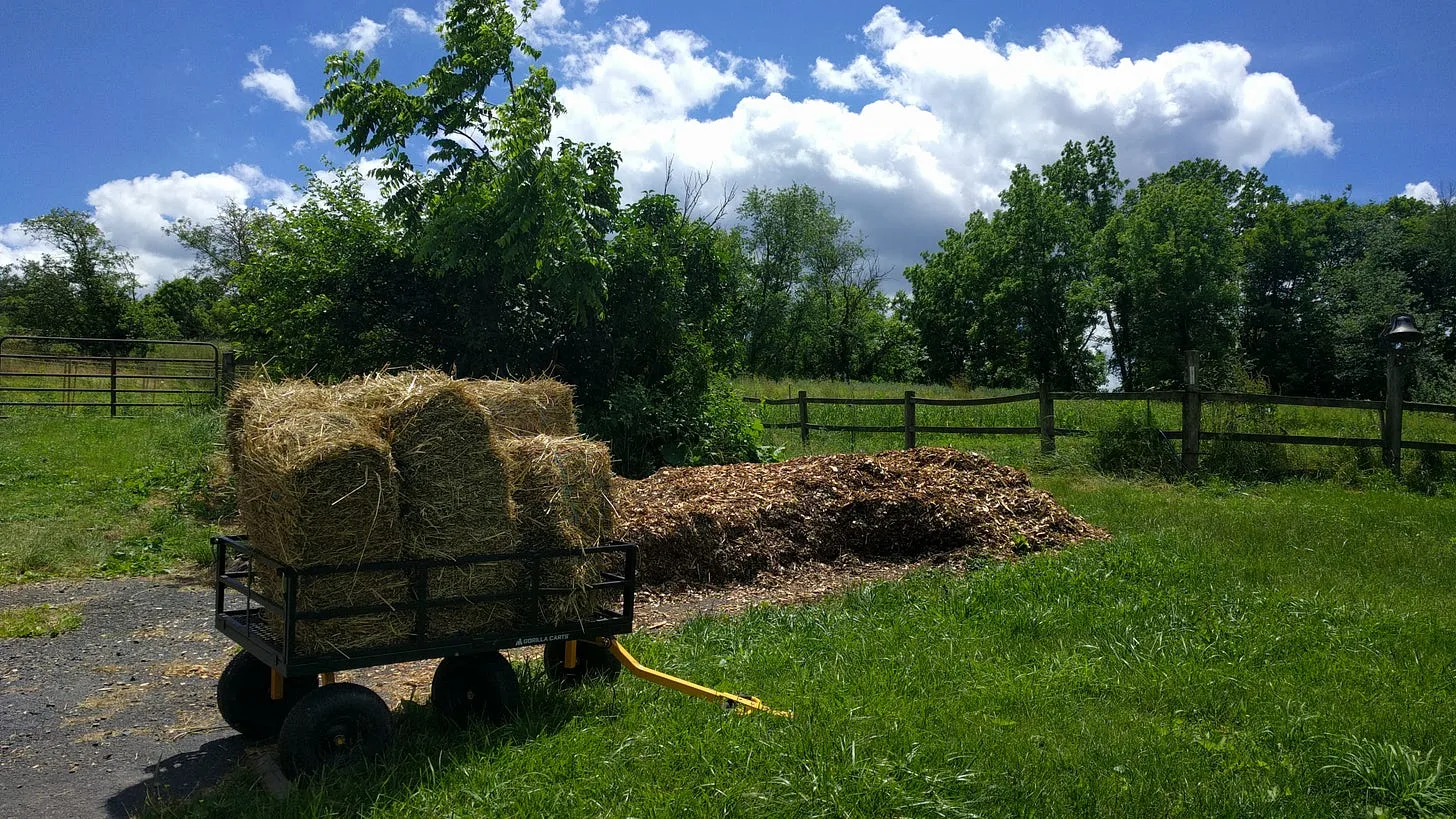
It is true that without spraying, weeds and bugs may overgrow or choke our main crops of vegetables. In small farms like ours, non-aggressive weed management ensures weeds remain short (not growing taller to overshadow crops) and do not produce flower and seeds to multiply in numbers. This parsimonious (frugal) approach is possible with occasional hand cultivation (weed whacking, light tilling, hand picking) and use of non-sprayed hay (in the picture on the left side sitting on the cart) or grass clippings from our land as a mulch layer. In some parts of our garden, like where we grow berries, we use wood chips from local tree loggers (not chemically treated, non-packaged, non colored, as seen in the pile on the right side of the picture). A mulch layer ensures a good flow of moisture and oxygen to the soil around our plants, while preventing direct sunshine needed by shorter weeds to overgrow our plants. Also, the layer of mulch protects the beneficial soil bacteria from being scorched by direct sunlight and when the mulch layer gradually breaks down it feeds the bacteria that feed the soil that feeds our plants! So nothing is wasted in the natural cycle of life on a regenerative farm. One man’s trash (grass clippings) is a regenerative farmer’s treasure.
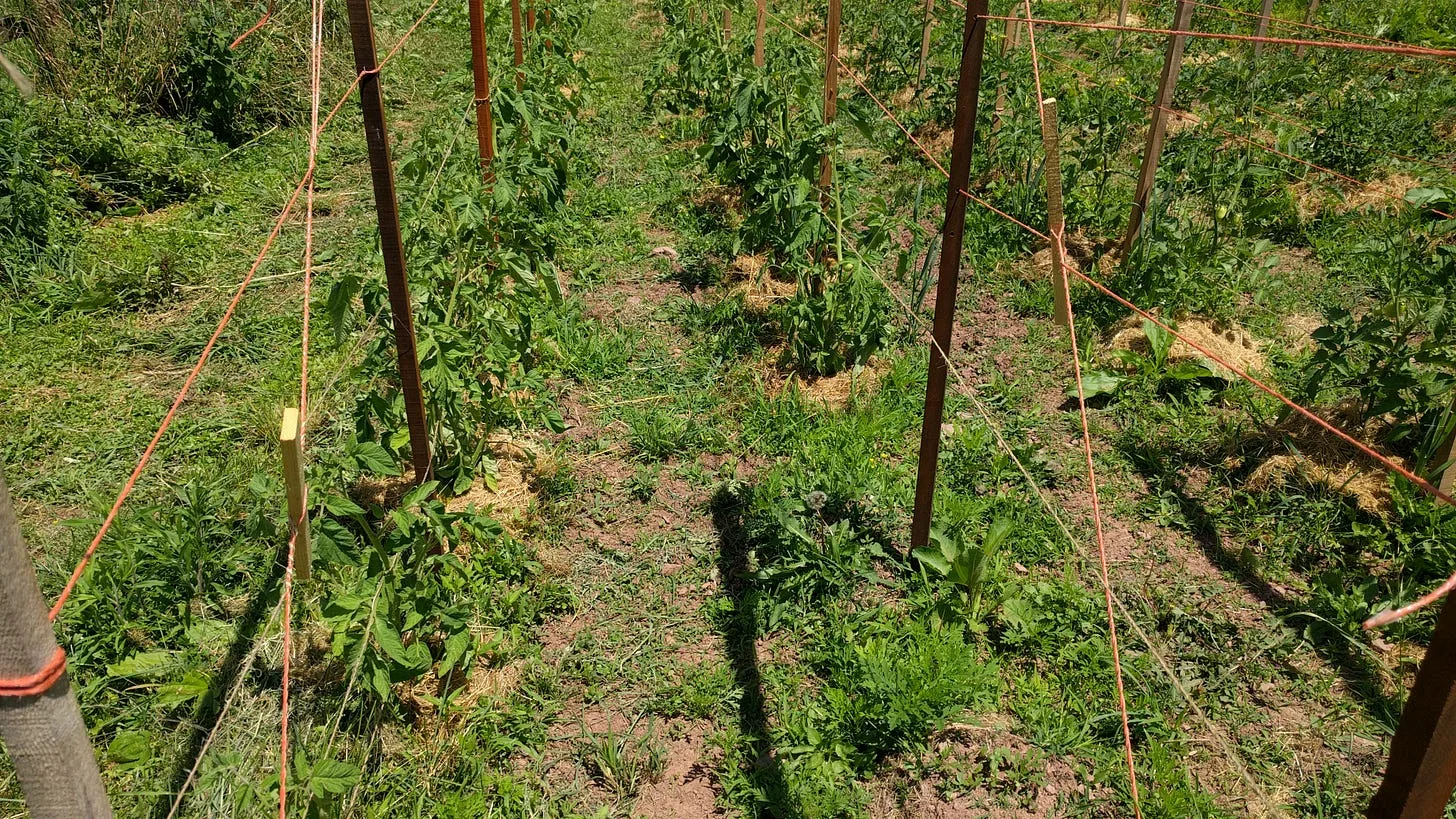
We use about $300 worth of natural hay and wood chips (the natural not packaged kind) per acre per year as natural weed-management input, which is about 1-2% of the value of chemical-free, tasty, highly nutrient vegetables and berries that can be grown on the healthy well-nourished soil (compared to scorched, sprayed dirt).
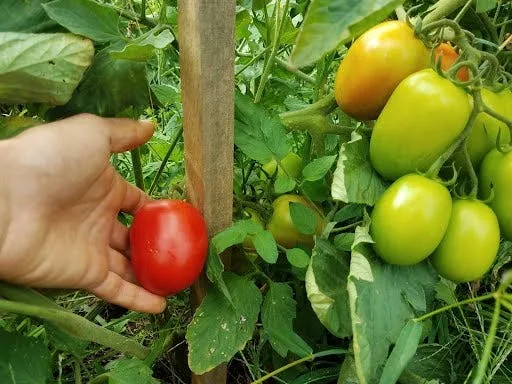
The methods is suitable for smaller vegetable farms (large gardens) up to 5-10 acres in size as long as there is enough manual labor for the chemical-free cultivation (weeding and hay placement). A family with 3 adults or teenagers can perhaps manually manage a 3-acre regenerative vegetable farm and a family of 4 adults or teenagers can perhaps manually manage a 4-acre regenerative vegetable farm using this method. It needs about $300 and one working adult or teenager per acre (available for a few hours here and there between March-September) to generate about $15000 (wholesale) to $30,000 (retail market prices) worth of tasty, nutritious, chemical-free, hand-cultivated vegetables the old-fashioned way.
Because of the manual labor needed in our method, many chemical-free, organic or regenerative vegetable gardens and farms larger than 5 acres use plastic mulch film (or ag film short for agricultural film) to create optimal light, moisture and temperature conditions for plants (like onions) while keeping weeds and insects under control. These plastic films are not easily biodegradable and can be costly and hard to remove (before harvest) but still economical for larger-scale commercial organic vegetable farming
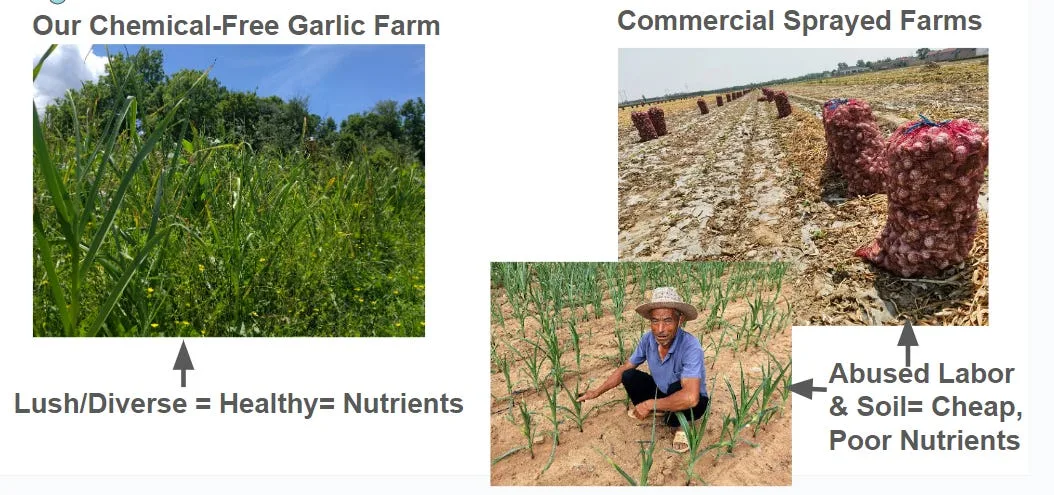
Thanks to non-aggressive weed control, our farm looks like a naturally created exquisite colorful tapestry and not a scorched dead patch of dirt. The image above compares our garlic patch to that of a commercial heavily sprayed mechanized monocrop patch of a “mega” farm, the kind that you most likely made the garlic you buy cheap in supermarkets or even some roadside farm markets. To further educate yourself about garlic, you should read my article about garlic “Learn these Facts before Using Garlic as a Magic Food.” You can also a qualitative differences between conventional vs. chemical-free garlic by leaving it in vinegar for at least a month:
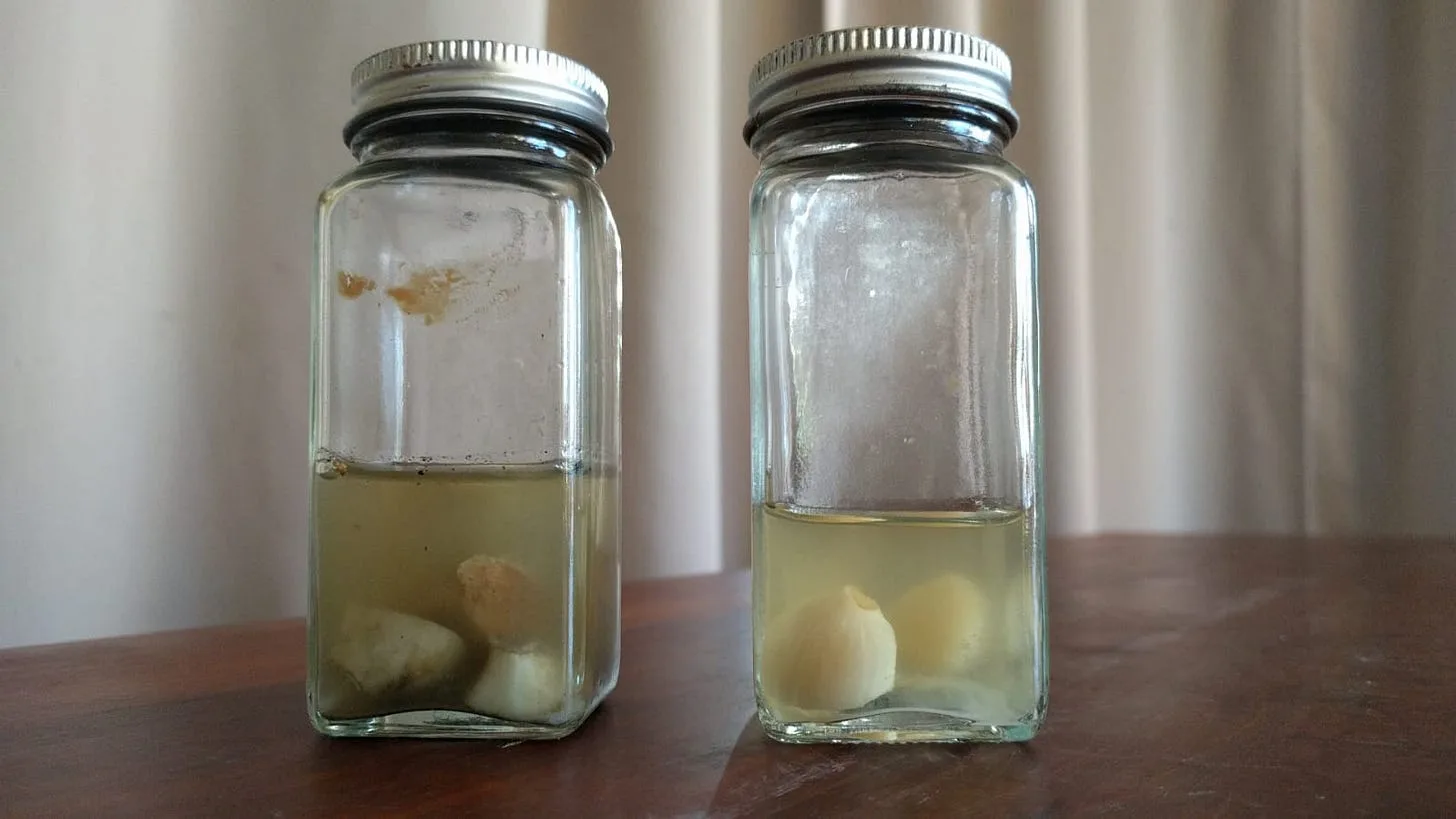
In the picture here you can see the dark green chemicals leaching out from a vinegar-soaked conventional (sprayed and fumigated) garlic. On the right, is our chemical-free hand-cultivated garlic soaked in garlic for the same length of time. We did not dare taste the content in the left bottle but our pickled garlic on the right is extremely tasty with sone sweet aftertaste.
These blogs, which take time to research and write, are my gifts to you. I have no corporate sponsors so without your help in sharing these articles with others, we cannot extend our network of critical thinkers.
By the way, if you live in or near Pennsylvania and like to purchase our produce from us directly, please drop me a note so I can share more details. We are not a boutique farm and our produce is priced reasonably and below store’s organic prices.
One last point about the way we grow vegetables without chemicals and aggressive weed and bug control. Many of the beneficial micronutrients in plants and vegetables, like polyphenols (the colorful protective compounds found in green tea leaves, blueberries, olives, grapes, citrus fruits, turmeric, etc.) are compounds that the plant uses to protect itself from environmental stressors such as weeds, bugs, cold temperatures, etc. Without environmental pressures, plants cannot produce much of these compounds which are shown, in moderate quantities, to also activate protective mechanisms in the human body (called hormesis) that produce antioxidants and molecules protecting our cells against damaging stressors.
In my book titled “Masks, Crutches, and Daggers: The Science of our Self-delusional, Addictive Homo economicus Brain” (available on Amazon) and my blogs on my other Substack called Homo economicus, I explain in detail (using neuroscience and behavioral psychology) the foolishness of the relentless pursuit of speed, convenience and short-term quantitative gains by the modern human brain.
This is buying directly from our farmer friends, neighbors and local tree loggers at reasonable prices. Buying processed or packaged mulch in large box stores would cost a lot more. They are also often denatured with all kinds of additives/colors for shelf-life, prevention of mold growth and good looks (aesthetics). If you contact your local tree loggers, they will often be glad to deliver to you (for free or very low cost) their fresh untreated wood chips (shredded from tree branches).