
Facts About Bear Hunting
Bears were a primary source of food for Inuit and Siberian populations. Bear fat was used historically to treat baldness (in Europe), as cooking oil, lamp fuel or medicine by American settlers and Native Americans. Today, many Americans in rural and wooded areas go bear hunting as a hubby or for meat.
Information sharing today is mostly a profitable and sponsored business. Be wise. Don’t sell your attention to “attention merchants.” Get your information by supporting “independent” (non-corporate) scientists (like me) who share uncensored, unsponsored science and useful, simplified insight. I am guided just by my God-given conscience, not by mobs, politics, profits or corporations. By honoring me as a subscriber, you will receive my articles, parts of my book and ability to be in my network (for questions and answers):
There are strict Game Commission schedules and restrictions for bear hunting in our state. For example, Black Bear hunting with a Muzzleloader is allowed in different time windows (usually October and November) than Black Bear Bow (archery) hunting. Spring hunts are usually not allowed because they can kill mother bears, leaving orphaned cubs to fend for themselves or starve to death. Each year around 3000-4000 bears are hunted in Pennsylvania.
Most hunters condemn bear hounding (using packs of radio-collared dogs to pursue a bear until the exhausted, frightened animal climbs a tree, where they are shot) or baiting as unsportsmanlike, unethical and violating the doctrine of “fair chase.”
One form of “fair chase” used in rural Pennsylvania involves spotting a bear (by looking for old-growth timber, food sources like berries and rose hips and signs like broken branches, and claw marks on tree barks), and then trying to trap a spotted bear by a group of hunters forming a u-shape (bowl shape) human chain and making loud noises as they close the chain around the bear. Bears don’t see or hear well, but their nose is reportedly stronger than dogs so hunters try to stay downstream of a wind (down wind) from the spotted bear, if possible.
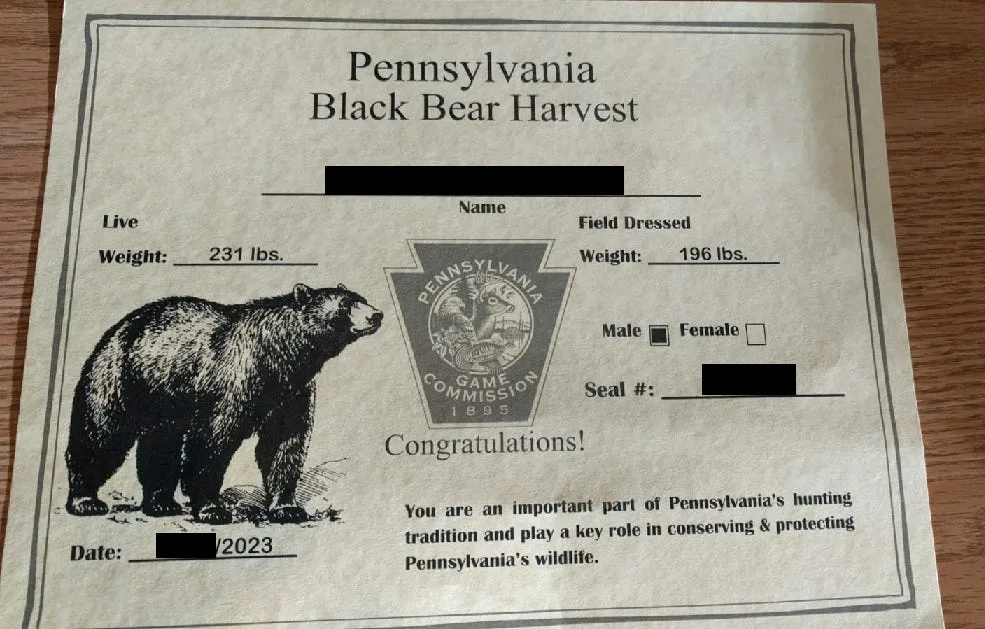
All harvested bears should be inspected, weighed and licensed before being processed. Bears have a tremendous amount of fat and a thick hide that provide great insulation. Both the meat and the hide can spoil quickly especially at temperatures above freezing. A dead bear can be large and cumbersome. Skinning, processing and transporting a bear are difficult tasks.
These blogs, which take time to research and write, are my gifts to my subscribers. Without your help in sharing them with others, we cannot extend our network of critical thinkers.
Unlike grizzly bears, black bears are often not expected to have an aggressive posture towards humans unless faced with aggression or sensing a threat to their cubs.