
Dog or Monkey Kidneys, Chicken or Human Embryos?
The Untold Dark Side of Genetic Engineering
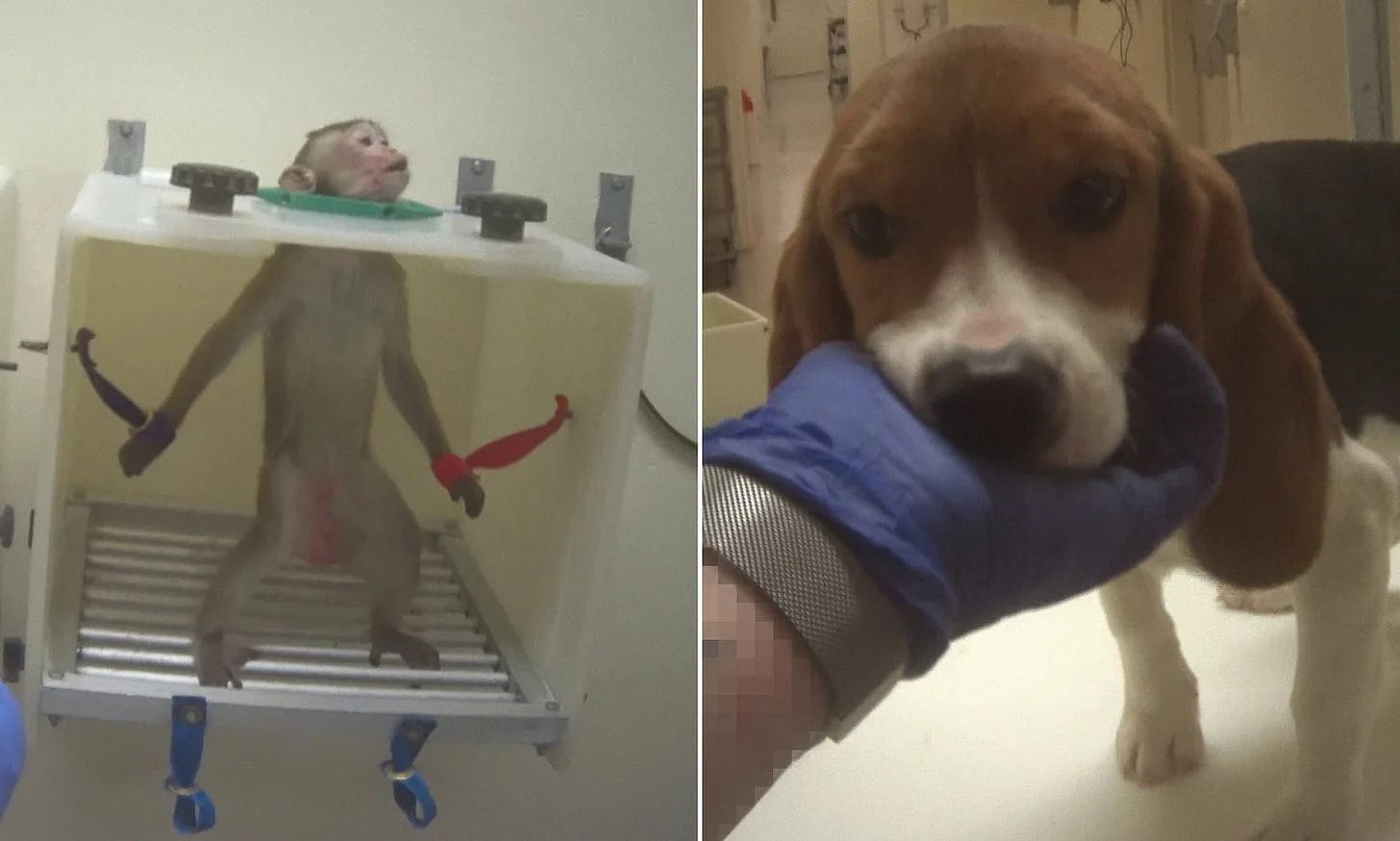
Many Americans were outraged when Donald Trump claimed dogs are slaughtered for food by some illegal immigrants, yet few realize dogs, as well other animals like monkeys and rabbits, are regularly slaughtered for transgenic research and medical manufacturing. Also, many people do not realize the milk they drink and the meat they eat is probably from animals which are genetically reprogrammed and manipulated (such as through cloning technologies of embryo splitting and blastomere nuclear transfer), artificially inseminated (AI) or fed genetically-engineered growth hormones. Genetically engineered animals are also developed for producing food as well as non-food materials such as pharmaceuticals, vaccines, fibers, and other profitable products.
Science today is mostly a sponsored business! Guided by conscience and not politics or profits, Ray Armat, Ph.D. is an independent polymath, farmer, educator and former NASA grantee who brings you simplified, uncensored, unsponsored insight and analysis.
Confusion About Gene Editing (Manipulation)
Genetically-engineered crops and vaccines have stirred a lot of debate and controversy among professionals in recent years. In The Superpigs and Wondercorn: The Brave New World of Biotechnology, Michael W. Fox raises some early but serious concerns about bio- and genetic engineering of crops and transgenic animals. In recent years, physicians and scientists like Dr. Peter McCullough and journalists like Sharyl Attkisson have exposed the dark side of gene-based mRNA COVID vaccines.
Ordinary people, unaware of controversies in professional circles, and enamored by the words “genetic” and “science,” admire progress in gene-editing science and believe it is both effective and beneficial for humans. This article, is to show the lay people some dark sides of the technology often not discussed in the sponsored corporate media.
Lay people are often confused or ambivalent about gene editing technologies. In California, for example, progressive liberals have a perplexing attitude towards the technology. On the one hand, they have pushed for strict laws and proper labeling of Genetically Modified (GMO) food. On the other hand, during the COVID-19 pandemic, the same liberal circles who were harshly critical of gene-editing of crops (like corn), tyrannically silenced critics of gene-editing (mRNA) technologies used in COVID-19 vaccines! Folks who were against eating genetically-modified organisms, mandated and forced injection of genetically-engineered pathogens (spike protein of the SARS-CoV-2 virus) directly into the blood of millions of people, even those who were naturally immune (previously infected) or children with strong natural immune systems!
Monstrous Ethics
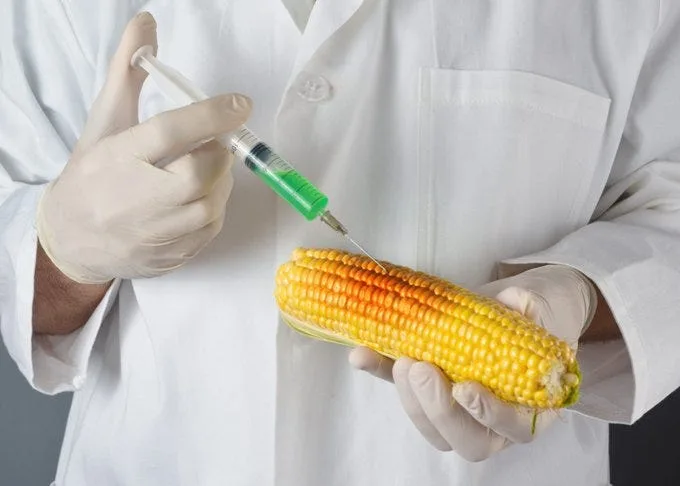
Genetically hybridizing corn seeds and DNA may sound benign to most people but how about using kidneys from monkeys or dogs to genetically replicate virus strains for human vaccines? The simian (monkey) virus (SV40), that was present in kidney cells harvested from rhesus and African Green monkeys for poliovirus cultivation and introduced into human bodies via polio vaccines from 1955 to 1963, is still causing cancers and is present in human ependymomas, choroid plexus tumors, bone tumors, and mesotheliomas some 60-70 years later! Cell-based vaccine manufacturers also regularly sacrifice dogs and use their kidney cells (like Madin-Darby Canine Kidney cells) to grow flu viruses. Other animal cellular substrates used in viral vaccine production are avian (bird), invertebrate (worms) and mammalian cell lines (from rabbits and pigs). For example, Porcine trypsin, extracted from the pancreas of pigs slaughtered by the food industry, is added to the final cell culture to activate the virus during the manufacture of vaccines. Today, the commercial production of biopharmaceuticals requires many different cell lines from slaughtered animals (such as African green monkey kidney cell line called Vero) and even aborted humans.
Other culture cells have mysterious and benign-sounding trade or code names like WI-38 which are “human” cell line derived from the lung tissue of a 3-month-old female fetus that was aborted (terminated/killed). MRC-5 (Medical Research Council cell strain 5) is a diploid cell culture line composed of fibroblasts, developed from the lung tissue of a 14-week-old aborted Caucasian male fetus. The PER.C6 cell line is derived from human embryonic retinal cells that were originally obtained from a 1985 abortion in the Netherlands. The cells were immortalized through transfection with an E1 minigene from adenovirus type 5.
Sf9 is obtained from the ovarian tissue of the female fall armyworm. CEF (Chicken embryo fibroblasts) are isolated from 10-days-old chicken embryos. CHO (Chinese hamster ovary) cells are derived from the ovaries of slaughtered Chinese hamsters. Primary cell cultures from mouse brains are also popular in the production of viral vaccines.
So as you see, a lot of God’s creatures are sacrificed for transgenic research and manufacturing processes. It’s not just about making sweeter (denatured) corns or corn syrups.
The scary field of genetic engineering is now extended into military applications. DARPA — the Defense Department’s advanced research wing — has an entire new program called Advanced Plant Technologies (APT) dedicated to exploring how plants could be engineered to spy on their environment and detect threats like explosive, chemical and biological weapons and radiation.
Pharming Disasters for Animals
The process of genetically modifying animals to produce pharmaceuticals is called “pharming,” which is a combination of the words "farming" and "pharmaceuticals." The process involves inserting genes that code for useful pharmaceuticals into the DNA of animals or plants, creating genetically modified organisms (GMOs). The proteins produced by these GMOs can then be collected and purified from the animal's milk, eggs, or blood to be used as drugs or other therapeutics. Effort has also been made to generate genetically engineered farm species such as cows, goats, and sheep that express medically profitable proteins in their milk. They call these animals “transgenic animal bioreactors.” In 2006, ATryn® became the first protein (anticoagulation to prevent blood clots in some patients undergoing surgical procedures) produced by genetically engineered animals to be approved by the Food and Drug Administration (FDA). The protein has been linked to serious hemorrhaging (bleeding) inside abdomen and joints following the procedure.
Some vaccines grown in animal cells have led to catastrophic results:
Something strange started happening to newborn beef and dairy calves in Europe in 2007. They had low blood cell counts, their bone marrow was depleted and their platelets were destroyed. As a result, the animals’ blood clotting ability failed and they bled spontaneously from their nostrils, rectum, mouth and tagging and injection sites. There would be bruising on the gums and around the eyes, while blood shed in the feces indicated internal bleeding. The condition was usually fatal, at a death rate of 95 percent, and calves would die within weeks of birth. The condition became known as “bleeding calf syndrome,” or technically as bovine neonatal pancytopenia (BNP). There is evidence that BNP is linked to the use of a Pfizer vaccine against “Bovine viral diarrhea virus” (BVDV). Pfizer introduced its Pregsure vaccine in Europe in 2004 to protect against BVDV. The first cases of BNP occurred around 2007. The vaccine was introduced in New Zealand in 2008 and the disease was reported in 2011. After evidence emerged that vaccination with Pfizer’s PregSure BVD was linked to alloantibodies which are transmitted via colostrum to the calves, Pfizer finally pulled the vaccine from the European market three years later (in 2010) but concerns were raised in New Zealand about whether colostrum or milk from vaccinated dairy cows would affect human health.
There are other uses of transgenic research. Porcine (pig) heart valves from genetically-modified pigs are used in human heart valve replacements and can cause complications such as immune reaction, calcification, and rapid structural deterioration.
In 2015, GE Free New Zealand released a report covering 15 years of AgResearch trials using 60 cows bred to express certain transgenic proteins, including a human protein, in their milk. The paper, authored by Claire Bleakley, president of GE Free New Zealand, reports that the animals were suffering inordinately from chronic illness, unexplained deaths and severe deformities as a result of the foreign DNA inserted into the embryos: "[The report] is a catalogue of disasters. AgResearch has constantly said that there is no problem, and that the animals suffer from basically normal farming disorders. When you look at this, these animals are suffering inordinately - from sterility, from chronic illness, from sudden death .. These annual reports catalogue a sad and profoundly disturbing story of illness, reproductive failure and birth deformities that have consistently afflicted the genetic engineering (GE) trials. Both the surrogate and transgenic cows suffer from chronic illness, reproductive losses, sudden unexplained deaths and severe deformities, relating to the foreign DNA inserted in the embryos used in the artificial insemination program. Most of the transgenic cows are not able to reproduce past the first generation. The transgenic cows that have produced a second generation have borne sterile offspring… Clinical trials on transgenic proteins have resulted in allergic reactions in subjects causing the trials to be terminated early.”
Dr David Wells, a principal scientist in the reproductive team at AgResearch, said that there were serious issues and that the “programming” of genes can easily go wrong: "We acknowledged that there are animal welfare concerns with the current technology - rather the methods we've used to generate those embryos. Many of the deformities that have incurred [are due to] incorrect programming.”
In 2000, Purdue University researchers found that releasing a transgenic fish to the wild could damage native populations even to the point of extinction. Purdue animal scientist Bill Muir and biologist Rick Howard used minute Japanese fish called medaka to examine what would happen if male medakas genetically modified with growth hormone from Atlantic salmon were introduced to a population of unmodified fish. The research was conducted in banks of aquariums in a laboratory setting.
The results warn that transgenic fish could present a significant threat to native wildlife: "Transgenic fish are typically larger than the native stock, and that can confer an advantage in attracting mates" Muir says. "If, as in our experiments, the genetic change also reduces the offspring's ability to survive, a transgenic animal could bring a wild population to extinction in 40 generations."
Disastrous Deadly Results in Humans
Gene editing technologies may help increase the yield of certain crops at the expense of other traits (like nutrient density or natural pest resistance). Dr. John Fagan,, Professor of Molecular Biology, explains an example of how things can go wrong, way wrong:
Food supplements, such as amino acids, are often manufactured by fermentative processes, in which large quantities of bacteria are grown in vats, and the food supplement is extracted from the bacteria and purified. One amino acid, tryptophan has been produced in this way for many years. In the late 1980's the company Showa Denko K.K. decided to use genetic engineering to accelerate and increase the efficiency of the production process. They genetically engineered bacteria by inserting new genes that caused the bacteria to express new enzymes, .. [which] altered the cellular metabolism substantially, leading to greatly increased production of tryptophan. These genetically engineered bacteria were immediately used in commercial production of tryptophan, and the product placed on the market in the USA in 1988. The Food and Drug Administration allowed Showa Denko to sell this genetically engineered product without testing because they had been selling tryptophan, produced in non-genetically engineered bacteria, for quite some time without ill effects. It was argued that the method of production (whether via natural or genetically engineered bacteria) was immaterial and that, since tryptophan had already been shown to be safe, the new material needed no testing. Furthermore, FDA regulations did not require that the new tryptophan be labeled as “genetically engineered.” This product was placed on the market, and within three months, 37 people died and 1500 were permanently disabled from using this product. It took months to discover that the poisoning was due to the presence of traces of a toxic contaminant in the new genetically engineered tryptophan. One factor that contributed to the time delay was the fact that the product was not labeled as genetically engineered. It was later shown that the genetically engineered tryptophan contained a highly toxic contaminant. It comprised less than 0.1% of the total weight of the product, yet that was enough to kill people. This contaminant was identified as a dimerization product of tryptophan-two molecules of tryptophan chemically linked together .. generated when the concentration of tryptophan within the bacteria reached such [unnaturally] high levels that tryptophan molecules or their precursors began to react with each other. .. Being chemically quite similar to tryptophan, this toxin was not easily separated from tryptophan, and contaminated the final commercial product at levels that were highly toxic to consumers. Some ambiguity remains regarding this incident, because it was quite threatening to a number of parties, including Showa Denko, the FDA, the biotechnology industry, and the food supplement industry. Therefore none of these parties were interested in an in depth definitive analysis of the incident. .. The biotechnology industry was concerned that the fact that the bacteria used were genetically engineered, which could be used as evidence that genetically engineered foods and drugs are unsafe. The food supplement industry was threatened because it was, after all, a food supplement that killed people. The most problematic ambiguity resulted from the fact that Showa Denko destroyed all samples of the genetically engineered organism as soon as the problem was recognized. A second ambiguity resulted from the fact that Showa Denko had cut corners on the purification procedure used in producing tryptophan, and this occurred at about the same time that they began to use the genetically engineered bacteria. .. The genetic engineering industry has made strenuous efforts to create the appearance that purification was to blame.. In actuality, the following two lines of indirect evidence indicate that it is far more likely that genetic engineering was to blame: (1) The toxin has not been shown to be present in the original, non-genetically engineered bacteria. Thus the ability to produce the toxin must have been conferred by genetic modifications. (2) The tryptophan produced by other manufacturers, who have been using natural bacteria, has not been toxic, even though it is likely that they were also cutting corners in their purification procedures from time to time. Based on these points, we conclude that it is likely that genetic engineering was the determining factor in generating this toxin.
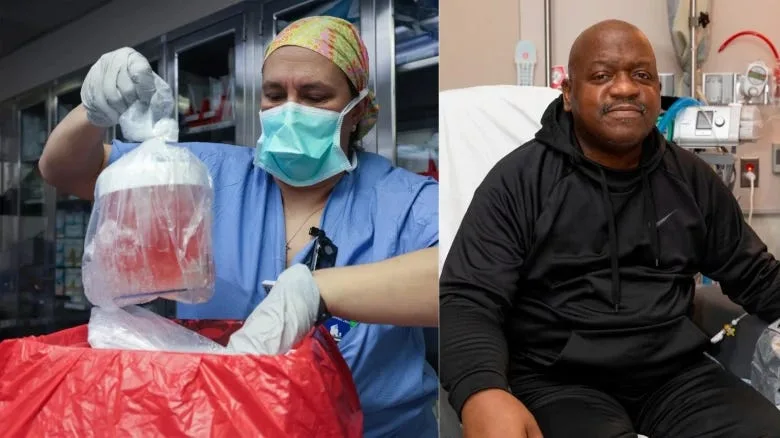
Genetically modified transplant organs have not been as successful as advertised either. What has not been widely publicized amidst all the fanfare, commercial investments and grants awarded to university researchers is the news that several patients who actually received genetically-modified pig organs (heart and kidney) died shortly after their expensive and widely-publicized surgeries (two tragic examples are shown in the pictures).
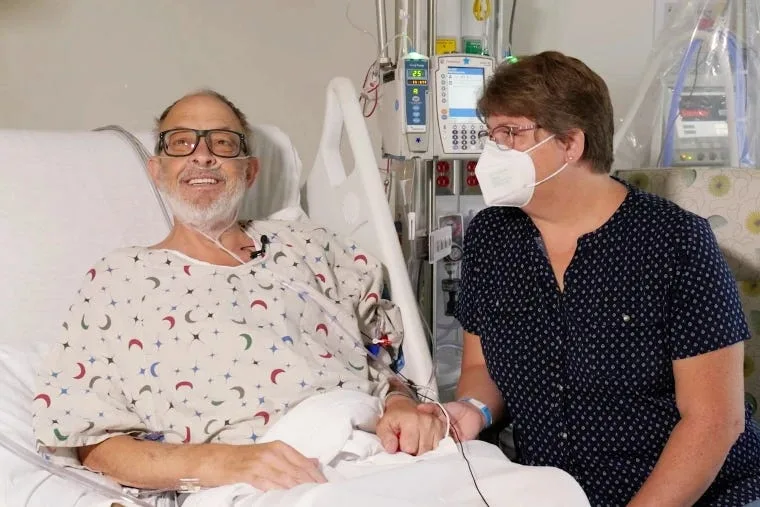
Apart from death and injury, genetically-engineered foods, pharmaceuticals and vaccines are thought to be partly responsible for the spike in the number of children and adults with severe food allergies.
Perspective and Insight
For years, as a scientist engineer, I was a staunch advocate of the so-called “leading edge” science like nano materials, recombinant proteins and controlled-release drugs, and genetic engineering. I was trained by reductionist science, which focuses on the local and temporal benefits of commercial (for-profit) biohacks and synthetic interventions, while disregarding, and occasionally censoring, long-term integrity and resiliency (health) of the “whole” system, and the impact of the ecosystem.
Genetic manipulation and transgenic research is neither as promising nor as harmless as advertised by the industry. This is no different than commercial glorification and promotion of other “imperfect” — usually harmful — substitutions for nature: C-section for natural birth, vaccines (artificial active immunization) for natural immunity and good health/hygiene, medicine for good food and lifestyle, baby formulas for mother’s breastmilk, etc.
The real risk of transgenic product development and animal research are (1) Lack and sometimes censorship of long-term data on human, animal and environmental health, and (2) Lack of proper oversight and regulation, as pointed out in The Lancet09878-1/fulltext):
Animal Biotechnology: Science-Based Concerns acknowledges that lack of evidence about risk is largely because of lack of research.. As the National Academies' committee points out, for the USA, the regulation of animal biotechnology falls haphazardly between too many governmental agencies, including food, drug, husbandry, and environmental agencies … Because risks, especially in agriculture and on the environment, remain unknown, a strict regulatory framework for the environment and for animal husbandry is urgently needed.
Elsewhere in the same article:
Genetic manipulation of aquatic species (for faster growth and improved food conversion) carries the most serious threat since such animals can escape easily and might compete with natural populations. Identifying environmental problems early and remedies after the event will be very difficult.. the large-offspring syndrome in cattle produced by in-vitro methods can lead to difficult calvings, caesarean sections, and congenital malformations. Early deaths are common in transgenic animals, and the survivors may have abnormal anatomy, physiology, or behaviour, including respiratory distress, cardiomyopathy, pulmonary hypertension, and metabolic abnormalities..
There are now millions of GM mosquitos released in different parts of the world to control other bugs. If we don’t question the long-term impact of these short-term fixes, these crutches can become our curses, as I explained in my first book “Masks, Crutches and Daggers: The Science of our Self-Delusional, Addictive Homo economicus Brain.”
In infants and adults with gut issues, the leaky digestive epithelium permits the absorption of intact genetically-engineered bioactive proteins into the bloodstream causing severe allergic reactions (out-of-control or autoimmune responses from the immune system).