
An Antidote to Addictions and Habitual Ruts, and a New Definition of Discipline
What Nature and Science Teach us About the Benefits of Random Walks
We are creatures of habits and most of us have a hard time kicking bad habits. The neuroscience of addiction, habituation and behavioral ruts deals with broken, or self-reinforcing, feedback loops that connect our brain and body through neurotransmitters (nervous system) and hormones (humoral or blood flow). For example, as explained in my recent blog about The Neuroscience of Gratitude, which is also shared in my book “Masks, Crutches, and Daggers: The Science of our Self-delusional, Addictive HomoeconomicusBrain,” (on Amazon’s Hot New Release):

The release of dopamine, the primary neurotransmitter that our brain uses to authorize our body’s pursuits and motivations, is mainly calibrated by the “surplus” reward we feel when we reach or exceed our goals and milestones. But there is a problem with this mechanism. To remain motivated in life, we need to constantly receive additional rewards by reaching or exceeding goals and raising the bar. If we fail, get burned out or fatigued in this process, we will suffer from depression. But if we keep moving towards higher and higher goals, the so-called “The Sky’s the limit” attitude, we become perseverative, relentless and dependent (addicted) on dopamine. As a result, modern humans often walk a tightrope between fatigue or burnout, depression or addiction, anxiety or recklessness, all rooted in the forward-looking (prospective) nature of dopamine and our motivations.
True education is an orphan today because it’s not profitable. I spend hours to separate good science from bad, noise from signal. Please sign up (Free or paid) to support this reader-supported publication, a wiser alternative to corporate-sponsored publications.
New research shows that even the pacing and tempo of rewards we receive on the paths we pursue in life will impact the degree of our addiction (habituation, impatience or neurologically-speaking “temporal discounting”) or “burn out” (withdrawal and disappointment). Frequent and large rewards make us prone to addiction and impatience, whereas disappointment and dopamine resistance leads to withdrawal, burn-out and depression. So how can we trick our brain to avoid these ruts and walking the tightrope of addiction and depression?
A simple trick to break down the self-reinforcing dopaminergic feedback loops is to “disrupt” our routine paths (of pursuit) randomly, occasionally and temporarily with a “random walk” (away from the usual tightropes) so our brain is conditioned with a new reward/risk pattern. The following is a modified excerpt from my book:
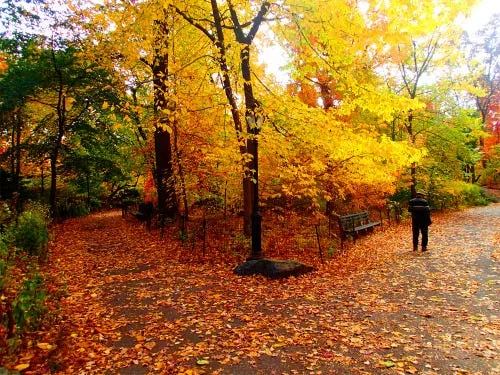
Stepping Away for Occasional Random Walks In The Road Not Taken, poet Robert Frost writes: “Two roads diverged in a wood, and I— I took the one less traveled by, And that has made all the difference!” Frost may not have known it but scientifically speaking, occasional “random walks” away from well-traveled paths are the stochastic trick used by mathematicians in all sorts of path optimization algorithms. In other words, if our brains are conditioned by us, or the mobs we follow, to be rewarded only on certain paths, we are not only vulnerable to habituation, addiction and self-delusional behavior, but we will most likely miss some of the best rewards in life that lie outside our rut or loop. Many successful athletes and business people define discipline as steadfastness on a certain path. But that could also place us on a perseverative path to habituation, and addiction. My definition of beneficial discipline is the ability to drop, randomly, occasionally and at will, our rewarding routines in favor of a behavior or activity that balances us. So if we are routinely rewarded by work, exercise, and listening to certain podcasts, our occasional random walk could be a few days in raw nature away from work and the internet, or listening to opposing views and podcasts we usually avoid, or lesser-known podcasters offering us new insight, or a new exercise routine working a different muscle group, or trying a new food. I remember during the early days of the COVID-19 pandemic, most supermarket shelves were cleared of food items except those of ethnic origin like hummus. I was shocked to see so many people would rather go hungry than try hummus, which is among the most nutrient-packed foods you can find in a supermarket. Random walks that expand our horizons can make us resilient and help us survive. In our family, we strive to maintain discipline, integrity, focus, balance, kindness and flexibility in whatever path we pursue in life. Beware of the Vicious Triple Hormonal Soup As explained in chapter 4, the most vicious conditioning cycle happens when our brain and body is cooked by …
Mathematically-speaking, “random walks” are very important in understanding and modeling how nature works. Scientists now use natural patterns like Butterfly Optimization Algorithms or Cuckoo Search Algorithm (based on the brooding parasitism of cuckoos and their egg laying strategy) to simulate real-life engineering optimization problems. In my book, I discuss different forms of random walk such as Levy walks and Brownian motion, as well as Monte Carlo simulations, swarm intelligence, Markov chains and meta-heuristic optimization algorithms.
In nature, where everything is in a constant state of change, dynamic optimization of rewarding paths or improvement of motion/growth often happens in small steps such as the random (Brownian) motion of particles or random walks of colony members (as in ant colonies). It may appears that straying from a rewarding path towards a predestined goal is unwise and punitive. But if the randomly moving members can communicate with each other and/or learn from their mistakes on their new “random” paths, over time and space, the collective path chosen will be most rewarding for the colony and its members. In fact, mathematically-speaking without inserting occasional random walks in a goal-oriented optimization simulation, it is often not easy to “dynamically” reach “global” (best overall) optimums.
Neurologically-speaking, occasional random walks (and they could be only slightly diverged from our routine goal-oriented paths) are helpful with breaking our self-reinforcing habits and addictions. Even kindness, when random, becomes less pre-meditated (calculative) and more rewarding in the long-term, hence the popular adage: “Practice Random Acts of Kindness.”
I try to practice random walks, literally, by going for short walks in random hours and random places, and intellectually, by educating myself in new topics (even those I dread) and reading/following lesser-known insightful educators/writers/podcasters. My big career random walk started after my trip to Frank Sinatra’s mansion (see my blog).
This post was my gift to you. Without sharing these with others, we cannot extend our network of independent critical thinkers.
Without the occasional random walks, our goal-oriented pursuits would behaviorally (through self-reinforcing feedback hormones like Cortisol and neurotransmitters like Dopamine) condition us to form rigid baselines that resemble tracks on a railroad which are impossible to escape from. We may call that “discipline” or dedication but it could actually turn into our (addictive) prison.